
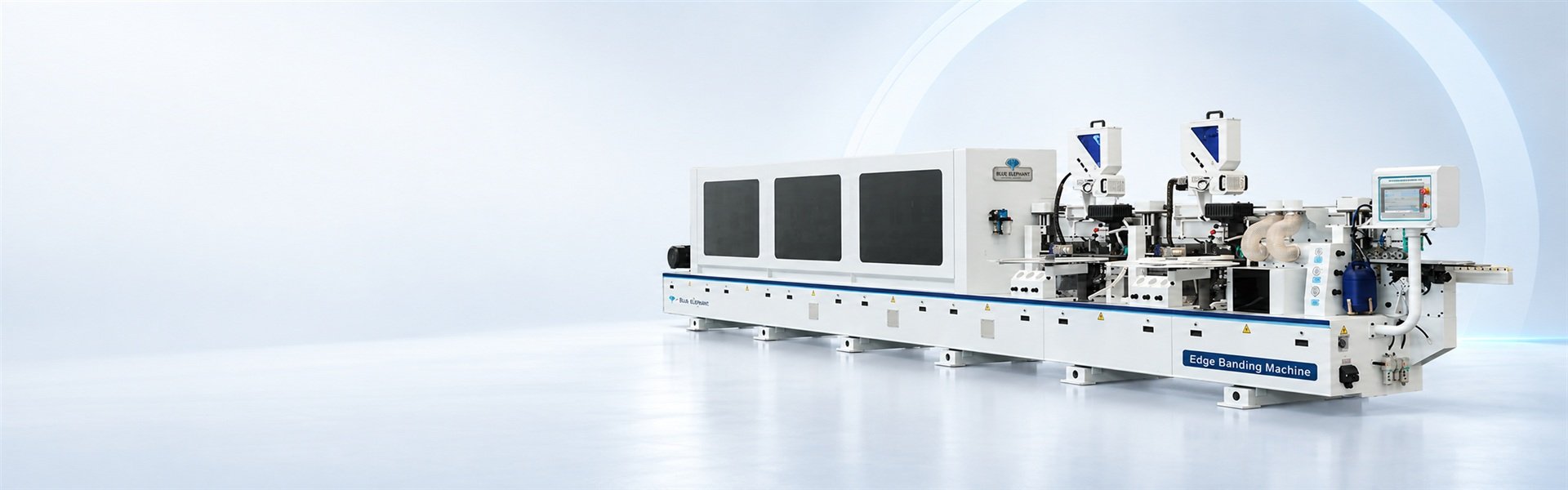
Automatic Edge Banding Machine Manufacturer
- Equipped with a high-speed up to 23 m/min motor to suit mass production
- Accurate pressure rollers and optional PUR to ensure minimal glue lines and seamless edge banding
- Undergoes over 160 quality inspection procedures, ensuring stable performance and long service life
- Hold authoritative certifications, including CE, ISO9001, BV, SGS, and TUV
- Fully automatic edge banding machine reduces labor costs by 70%
- Suitable for MDF, melamine, plywood, particle board, and solid wood panels
What is the Automatic Edge Banding Machine?
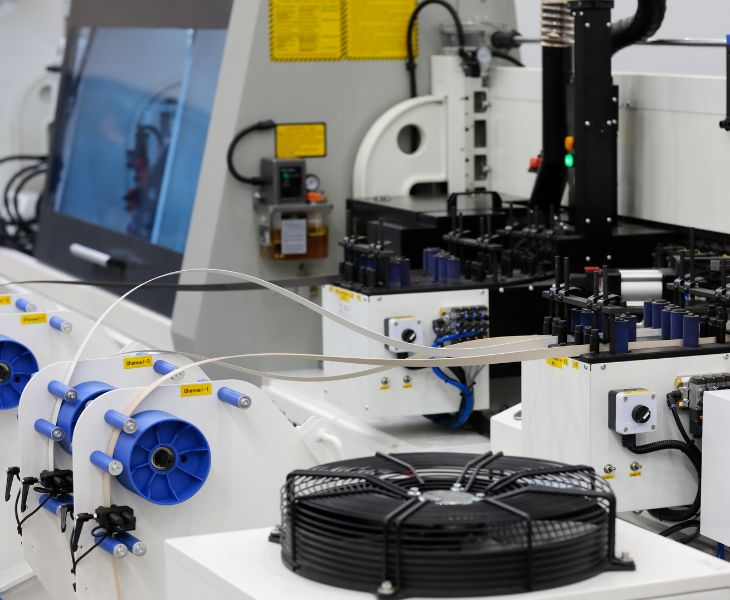
Our ElephMax automatic edge banding machines are used to apply edge banding materials such as PVC, ABS, and melamine tape to the exposed edges of panels. It can automatically complete gluing, edge banding, trimming, scraping, and polishing. This reduces manual work, lowers labor costs, and improves production efficiency.
Our machines are powered by top brands such as SIEMENS, BECKER, and OMRON for stable performance and long service life. They can provide smooth edge banding with minimal glue lines for a clean and professional finish.
Types of ElephMax Automatic Edge Banding Machine
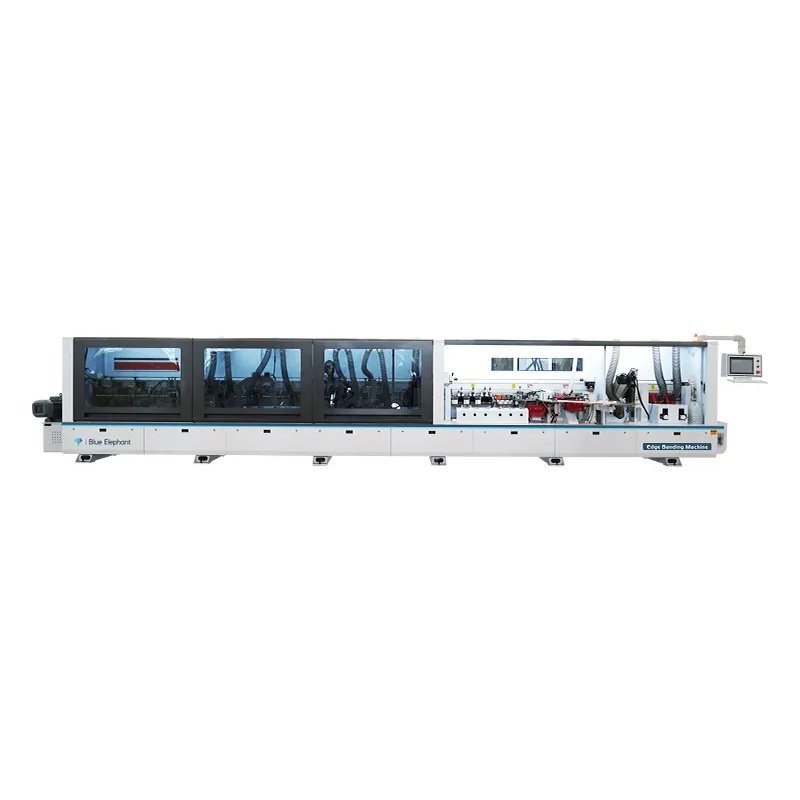
Integrated edge banding machine for straight and bevel edge processing, featuring automatic trimming, pressing, scraping and buffing for precise, smooth panel finishing.
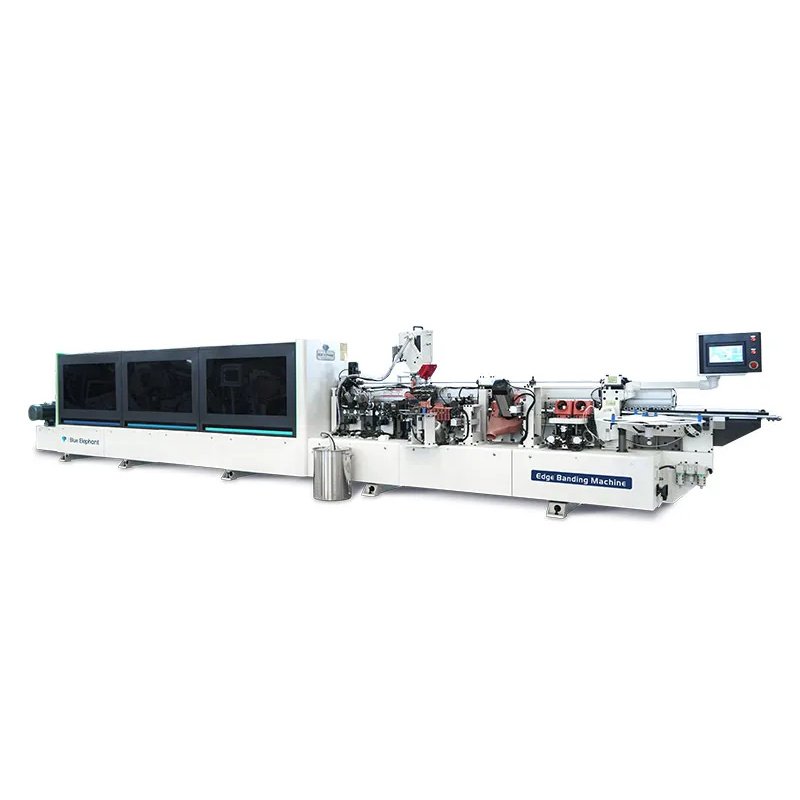
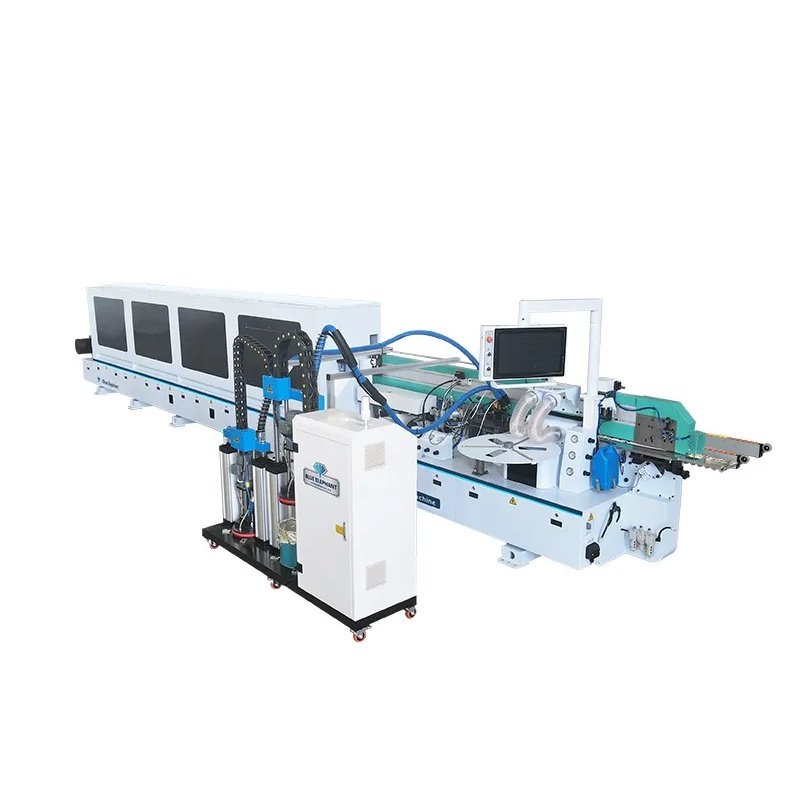
E-90 aluminum-wood integrated edge banding machine features PUR precision gluing, repeated steel-rubber-belt pressing, dual trimming, and feed speeds up to 21 m/min for continuous panel production.
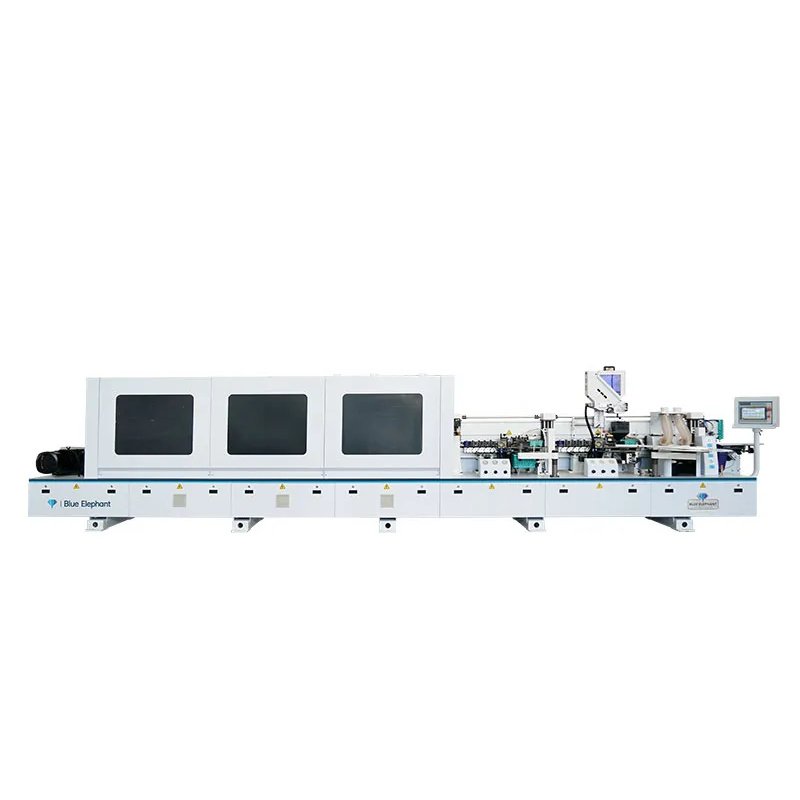
E-70JDSR automatic edge banding machine features hinge-hole avoidance, EVA/PUR glue compatibility, a 5.5KW motor, and feed speeds up to 23 m/min for uninterrupted panel edge processing.
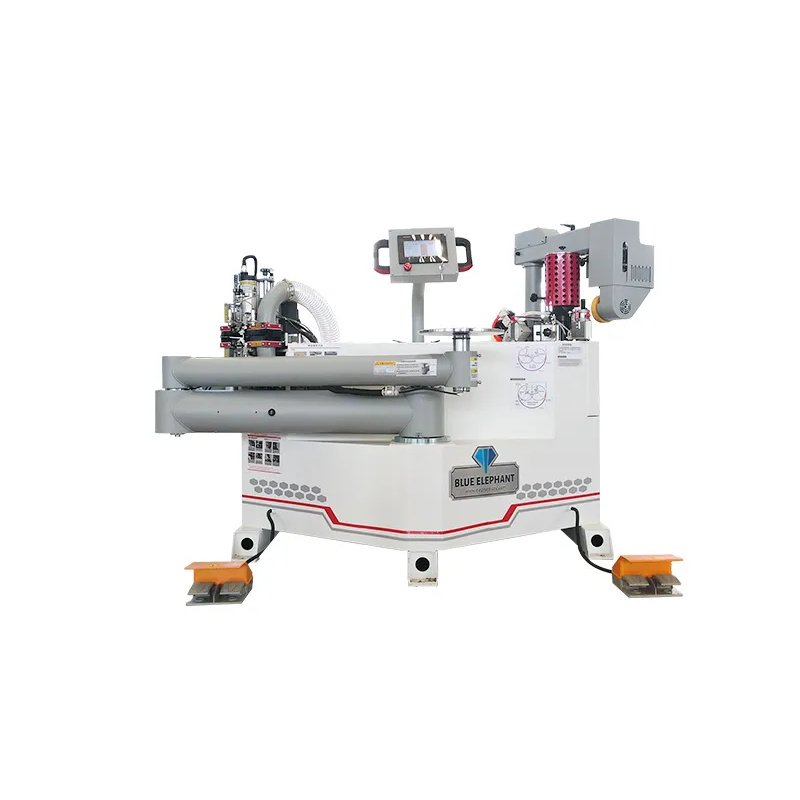
E-700-3 Pro automatic curve edge banding machine handles round, oval and rounded panels with auxiliary feeding, 15° head rotation, photoelectric detection and secondary pressing for consistent bonding.
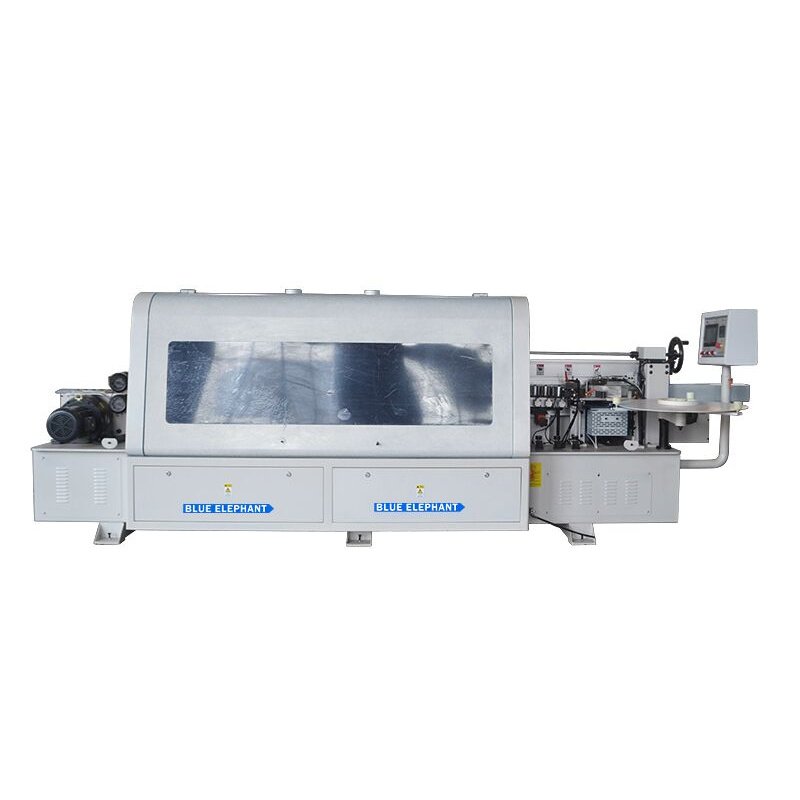
E-60 automatic edge banding machine supports 10–60 mm panels and 0.4–3 mm edge bands, with adjustable 15–23 m/min feeding and customizable processing parameters.
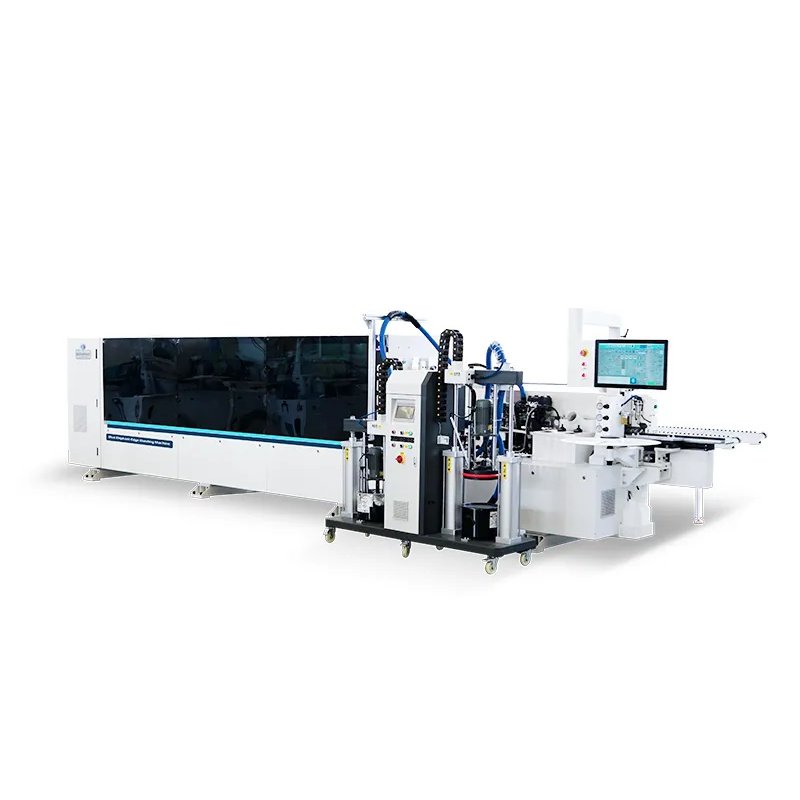
S600 heavy-duty automatic edge banding machine is built for narrow boards and high-volume production, featuring an integrated steel frame, servo edge feeding, four-motor tracking and rounding, and 18–25 m/min feed speed.
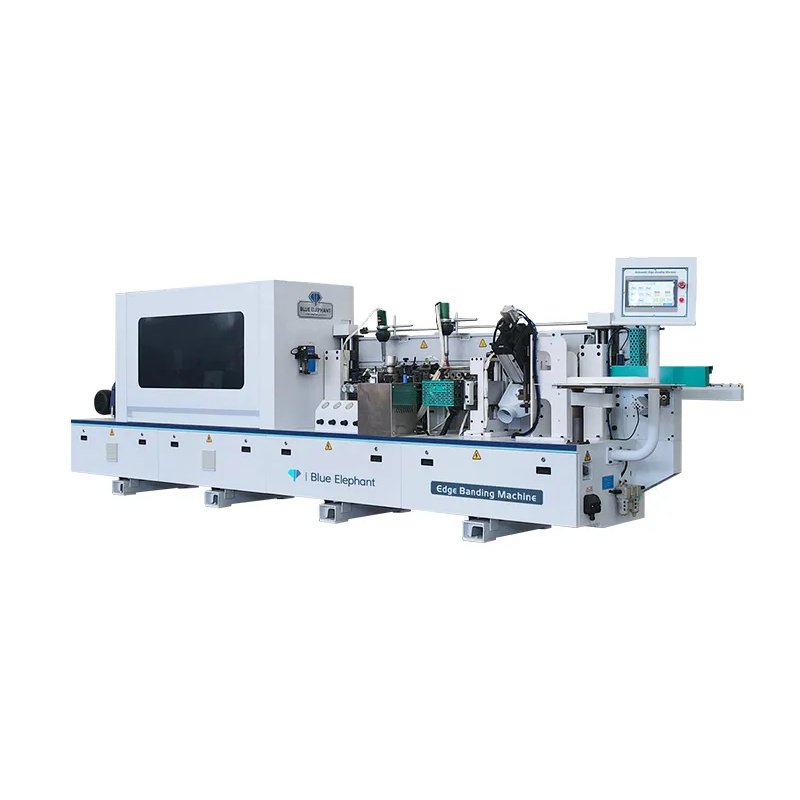
E-60C automatic bevel edge banding machine integrates 45° bevel cutting, notching, gluing, and pressing with straight-edge banding, supporting 18–25 mm panels at 12 m/min.
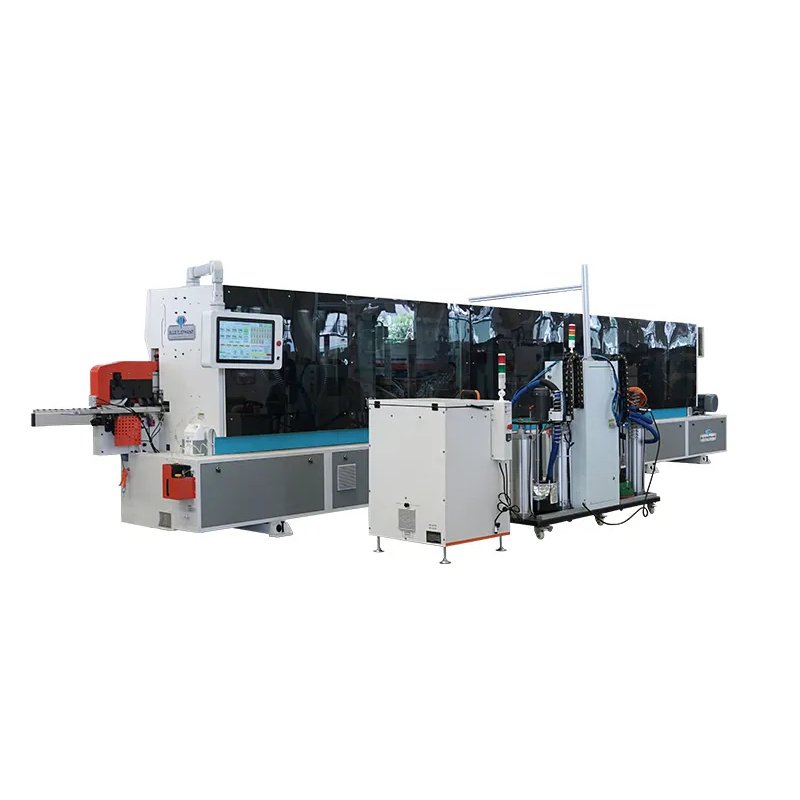
E-510 automatic soft-forming edge banding machine processes 21 edge profiles with precision template profiling, ≤0.2 mm milling error, and one-touch profile switching via a 21.5-inch touchscreen.
Why Choose Our Automatic Edge Banding Machine

Designed for efficient operation, our high-speed automatic edge banding machines reach speeds of up to 23 m/min, helping reduce production time and increase manufacturing capacity.

The optional corner rounding eliminates the need for manual edge finishing and sanding, helping reduce labor costs. It also creates smooth, seamless corner transitions.

Our mid-to-high-end models are equipped with a pre-milling function to ensure stronger adhesion and reduce the risk of delamination and edge bulging.

The dual glue pot configuration enables quick adhesive switching without stopping the machine to replace the glue, saving time and improving production efficiency.

This enables a single machine to handle both straight and beveled edge banding. It offers excellent cost-effectiveness by eliminating the need for separate machines.

If needed, this can be equipped to help reduce adhesive build-up, keeping the machine cleaner and preventing glue from affecting overall operating performance.

Our automatic edge banding machine replaces manual edge trimming. It automatically performs both rough and fine trimming, ensuring higher efficiency and consistent performance.

The fully automatic buffing process ensures consistent edge quality without being affected by manual operation or adding extra processing time.
One-Pass Complete Edge Processing
Our fully automatic edge banding machines integrate multiple processes into one production line, including spraying before pre-milling, pre-milling, gluing, end cutting, rough trimming and fine trimming, corner rounding, scraping, cleaning before buffing, and buffing.
The panel only needs to be fed once and does not need to be transferred to other machines for secondary processing. Compared with a semi-automatic edge banding machine, a fully automatic one reduces dependency on highly skilled operators.
If you need large-scale edge banding production, choosing an automatic edge sealing machine can greatly improve efficiency.
Flexible Customization
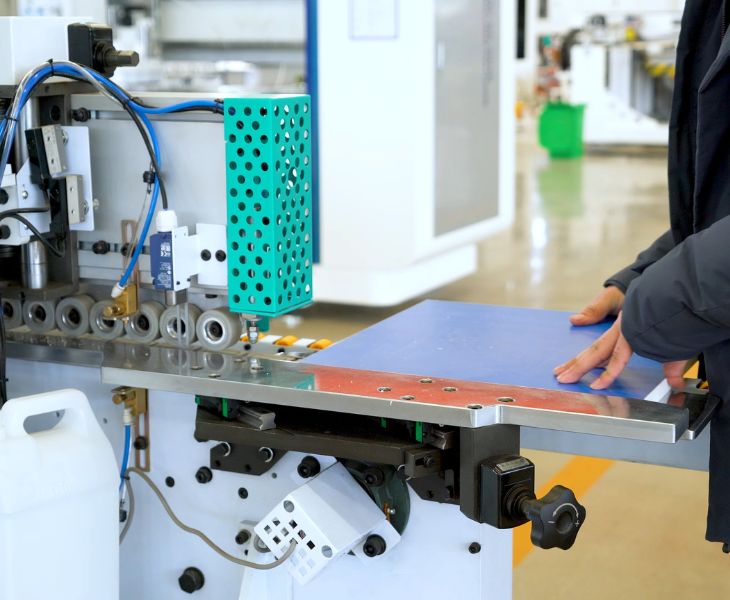
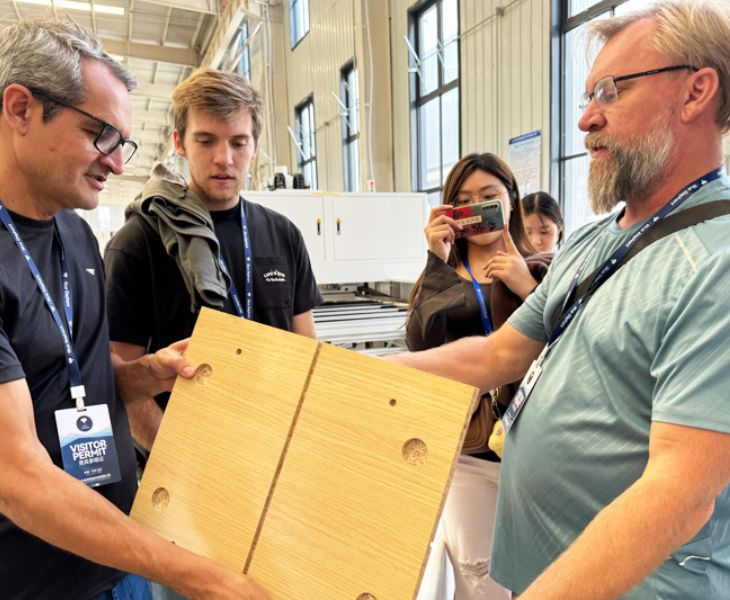
Our machines can be adjusted and customized according to different materials, processes, and production requirements.
The pre-milling system is optional. You can choose whether to use it according to your needs. The gluing system can be configured with a single glue pot, a double glue pot, or other processing modules. The panel size range can also be customized.
In addition, the machine’s appearance can be customized, including color and design style, according to your requirements.
Why Choose ElephMax?
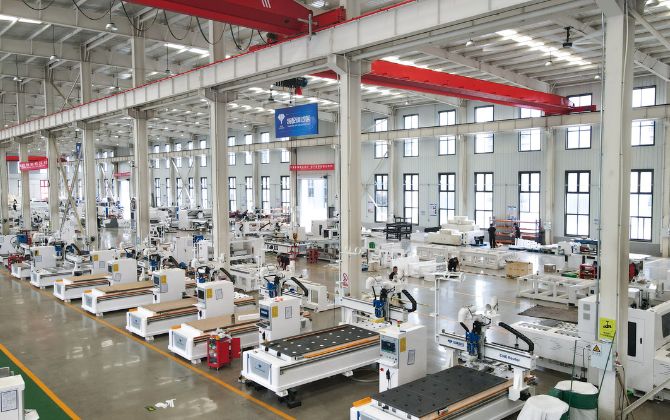

Factory and Technical Team: 75,000 m² modern production base and a 500-person professional technical service team. 30+ locations worldwide to support installation and service. Rich Industry Experience: As a reliable automatic edge banding machine China manufacturer, we have 16 years of experience providing automatic edge banding machines for sale to more than 9,000 domestic and overseas manufacturers. Reliable After-sales Support: 12-month warranty, 60-day trial period, plus lifetime technical guidance and support.
Common Applications of Our Automatic Edge Banding Machines
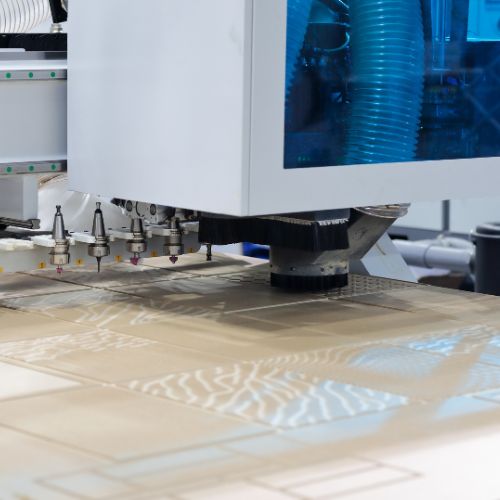
Our machines are ideal for large-scale production of standardized kitchen furniture components, significantly improving batch production efficiency through fully automatic edge banding.
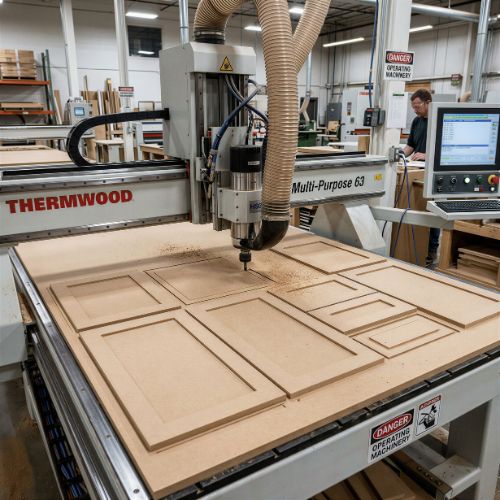
Wardrobes come in various sizes, and our machines can be adjusted to different specifications. Their automated polishing and finishing process provides stable edge quality, minimizes production errors, and helps support good product quality.
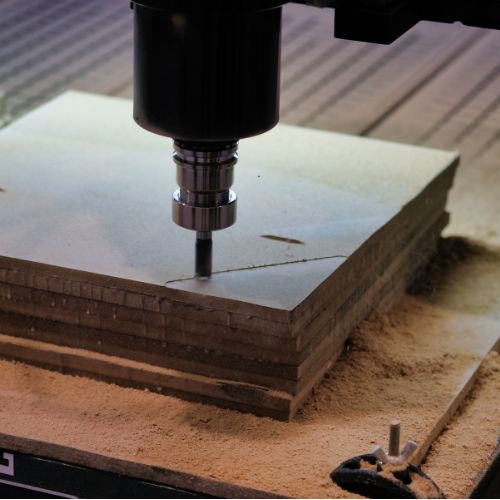
To meet the requirements of mass production, our fully automatic machines can significantly reduce labor requirements and ensure that the edges of office furniture, which are often used, remain smooth, safe, and free of burrs.
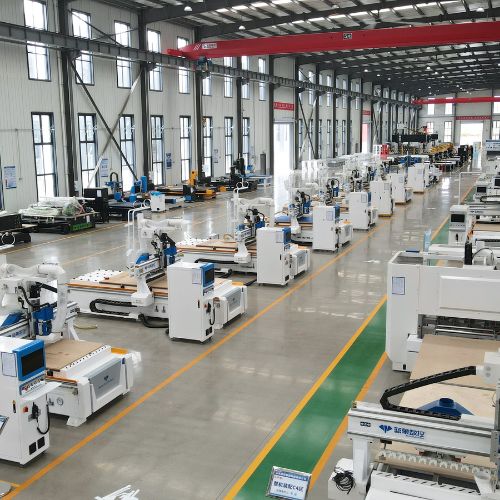
Our fully automatic edge banding machines help custom furniture workshops achieve a more professional production process and maintain both customization flexibility and stable product quality.
More About Our Company
- Specification
| Item | Specification / Description |
| Product name | Fully Automatic Edge Banding Machine |
| Edge Thickness | 0.4 – 3.0 mm (standard), up to 5.0 mm optional |
| Panel thickness | 10 – 60 mm (customizable) |
| Panel width | ≥ 60 mm |
| Edge banding width | 12 – 70 mm |
| Feeding speed | 9 – 23 m/min (adjustable, high-speed optional) |
| Working pressure | 0.6 – 0.8 MPa |
| Control system | PLC intelligent touch screen control |
| Gluing system | EVA / PUR system (single glue pot / dual glue pot optional) |
| Cleaning system | Optional automatic glue cleaning spray system |
| Suitable materials | Wooden panels of natural wood, engineered boards, plywood, softwood, hardwood, fiberboard, particle board, melamine board, LDF, MDF, chipboard, composite panels |
Testimonials
Our old manual edge bander is inefficient for bulk orders and has high labor costs and turnover reduces profits. Thank you for recommending the E-70J edge bander (23m/min, for large-scale production). We have greatly improved the efficiency and reduced labor costs by 70%.
 Canada | Cabinet Mass ProductionMichael Anderson, Production Manager
We are a new factory making custom wooden doors, seeking an edge bander. But we were unsure about the equipment and production capacity match. I am so satisfied that ElePhMax recommends a high-end E-70JDSR for the mass production of wooden doors. Our production efficiency is over 3 times higher than that of traditional machines.
 Australia | Wooden Door ProductionMatthew Taylor, Factory Director
At first, we were unsure about specs and performance and needed a versatile machine within budget. They recommend an entry-level E50 automatic edge banding machine. We are very satisfied with the discount price and stable performance. And the after-sales service is still excellent. They always respond to our questions in time. We are very satisfied with this cooperation, especially considering the competitive automatic edge banding machine market.
 United Arab Emirates | Tables Mass ProductionKhalid Al Mazrouei, Production Supervisor
During the edge banding process, “excess glue” is a relatively common issue. Without an automatic glue cleaning spray system, it is more likely for glue buildup and blockages to occur. The following aspects can be considered for improvement:
- Adjust the glue pot so the glue layer is not too thick
- Make sure the glue temperature is stable and suitable for the adhesive type
- Check that the pressure rollers are applying stable pressure
- Keep the glue system clean and carry out routine maintenance
The fully automatic edge banding machine should be powered off and allowed to cool down before any maintenance work to ensure safe operation.
Daily maintenance should be done after the glue has fully cooled. Cleaning dust and residues is the first step. Then, check the glue pot to remove any solidified or residual glue. Also, clean the pressure wheels and polishing wheels to prevent glue accumulation and maintain stable performance.
Weekly maintenance is recommended, including lubricating guide rails and chains, as well as cleaning the electrical fan ducts to make sure they are in good condition and can perform well.
When choosing, the following issues need to be taken into consideration:
- Output requirements: How many panels need to be processed each day, and is high-speed production required?
- Sheet type: Whether the machine is compatible with your materials and sheet thicknesses
- Function configuration: Whether functions such as pre-milling, double glue pot, rounding and buffing are needed
- Glue selection: EVA (for general use) or PUR (for high-end, waterproof and moisture-proof)
- Equipment size: Whether it fits the space of your factory workshop
- After-sales service: Whether there is technical support and a guarantee
- Budget cost: Automatic edge banding machine price and long-term usage cost
EVA has weaker water resistance and moisture resistance compared to PUR. If you use them at low or high temperatures, EVA is more likely to delaminate. So if your panels are used for cabinets, bathrooms, outdoor areas, or under high temperatures and humidity, PUR is a better choice. In addition, PUR glue lines are almost invisible, which gives a more refined appearance and gives off very little odor.
EVA can be re-melted, while PUR can’t be re-melted once cured, which makes rework more difficult.
If your budget is limited and your quality requirements are moderate, EVA is a more cost-effective option.
Automatic edge banding machines can’t be replaced if they are used in large-scale industry production. Semi-automatic and portable types have higher labor costs and require more human involvement. On one hand, this places greater demands on operators; on the other hand, it may lead to lower production efficiency. Their production capacity is also limited by operator speed, so it is difficult to achieve continuous high-output manufacturing.
Although the initial cost of a fully automatic edge banding machine is higher, its long-term operating cost is lower. Moreover, it requires less operator skill, is easy to use, and is suitable for mass production.