Selecting between a CNC router and a CNC milling machine represents a critical decision that impacts material compatibility, production costs, and part quality. This can meet the project demands of your customer and avoid risks caused by choosing the wrong equipment.
This article will cover various factors such as technical comparison, application and cost of CNC routers and milling machines.
What Is a CNC Router?
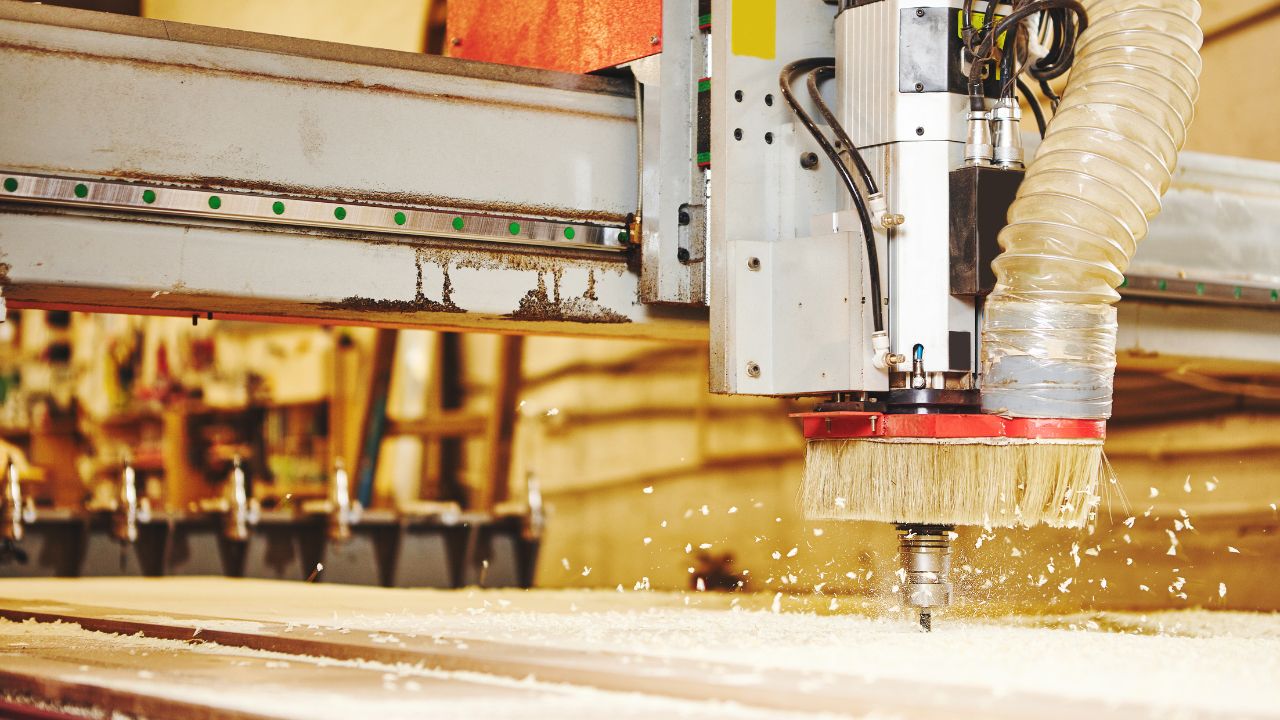
CNC routers typically have three or more axes for movement. And they are more suitable for soft materials. These machines run via CAD-generated G codes, which guide cutting tools to machine the workpiece.
On your CNC routers, the more tools configured, the more complex machining actions you can complete, meeting the design requirements of 3D CAD models.
You can choose various types of tools to achieve different processing effects, surface textures and cutting angles, including router bits, spiral bits, compression bits, V-groove bits and ball nose bits.
What Is a CNC Milling Machine?
The CNC milling machine can help you cut harder materials and create more precise features and surface treatments. If you need to use it for large projects demanding high precision requirements, or those that require rapid replication of parts, a milling machine can be chosen.
The milling machine performs machining operations by rotating the cutting tool with a multi-axis drive. You can use CAD and CAM software to generate G codes and corresponding toolpaths to direct the machine during the cutting process.
CNC milling machines can precisely plan the cutting paths and guide the machine to complete various processing procedures according to the design parameters, guaranteeing your final workpiece consistency in line with original design standards.
Key Differences Between CNC Routers and CNC Milling Machines
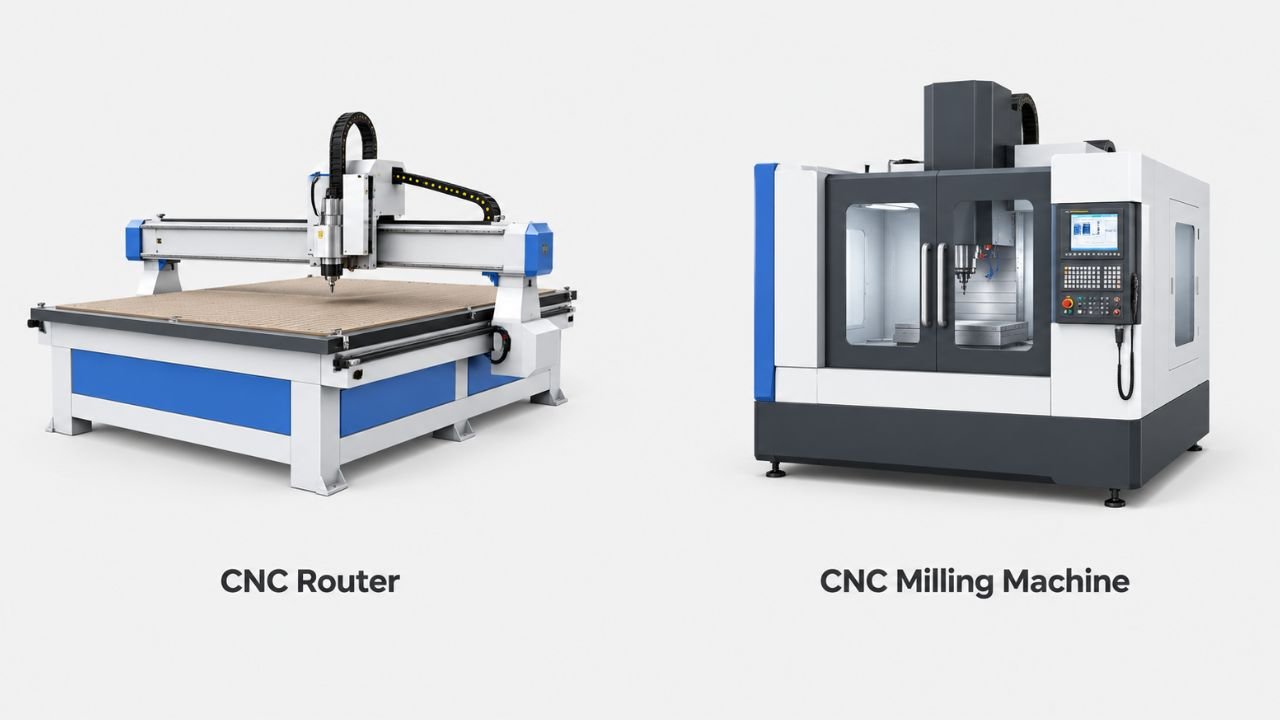
The cutting functions performed by CNC routers and CNC milling machines are similar, but there are significant differences at the core technology level. You can select between these technologies according to your specific project requirements.
In the following, we will conduct a comparison from the aspects of structure, performance and applicable materials, which will be beneficial for you to make an appropriate purchasing decision.
Machine Structure and Rigidity
CNC routers usually adopt a gantry structure and have relatively low rigidity. However, they offer adaptable operation speeds and a wide worktable, making them optimized for processing large-area sheet materials.
On the other hand, CNC milling machines have a relatively heavy and rigid bed, capable of withstanding strong cutting loads. However, their worktable size is smaller, and they are more suitable for small block-shaped metal parts.
Rigidity directly affects the structural stability and service life of the equipment. You can use high-rigidity CNC milling machines for long-term, high-intensity continuous machining, making the machines more durable. CNC routers are better suited for high-speed machining, and your initial investment is relatively lower, with a shorter payback period.
Machining Speed and Precision
CNC routers have the characteristics of high rotational speed and low torque, but their processing accuracy is relatively limited. The typical processing tolerance range is ±0.02 mm to ±0.1 mm (0.0008 inches – 0.004 inches).
Their processing accuracy is not inherently limited, but instead depends on the machine’s build quality, controller resolution, and spindle runout.
Compared with CNC routers, CNC milling machines have lower rotational speed but higher torque. Therefore, the processing speed of CNC milling machines is slower, while the processing accuracy is higher. The typical tolerance ranges from ±0.01 mm to ±0.05 mm (0.0004 inches – 0.002 inches). They are suitable for complex precision cutting processes.
You are highly efficient when using CNC routers, but for undertaking high-value orders, it is recommended to use CNC milling machines instead.
Materials Suitable for Machining
The materials fully adaptable to the two types of equipment also have certain differences. If you need to cut and shape wood, MDF, plastics, foam, composites materials, CNC routers are more recommended. A small number of soft metals like aluminum can also be processed by CNC routers.
However, CNC milling machines can cover both soft and hard materials. But they are mostly used to process hard metals such as steel, stainless steel, and titanium alloy.
Software and Axis Configuration
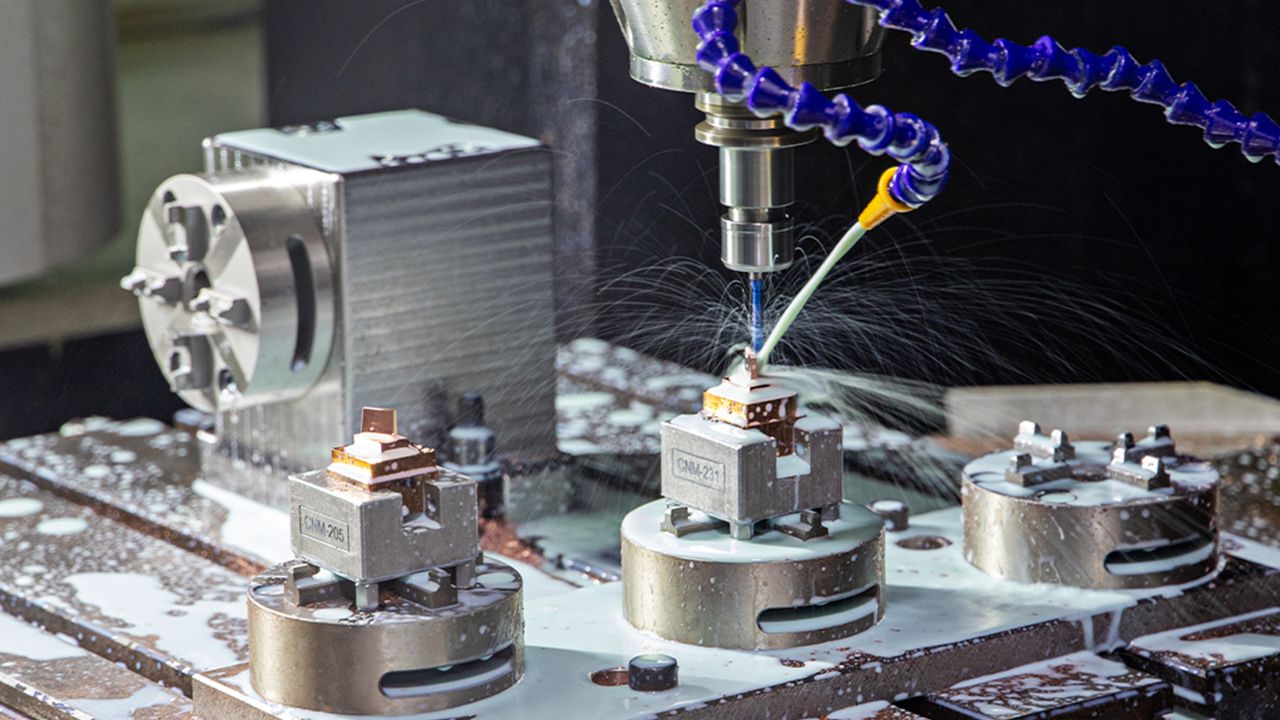
As CNC equipment, CNC routers and CNC milling machines all require programming software to support their operation. However, due to the different numbers of axes, there are differences in the processing paths, and thus the difficulty of the software used also varies.
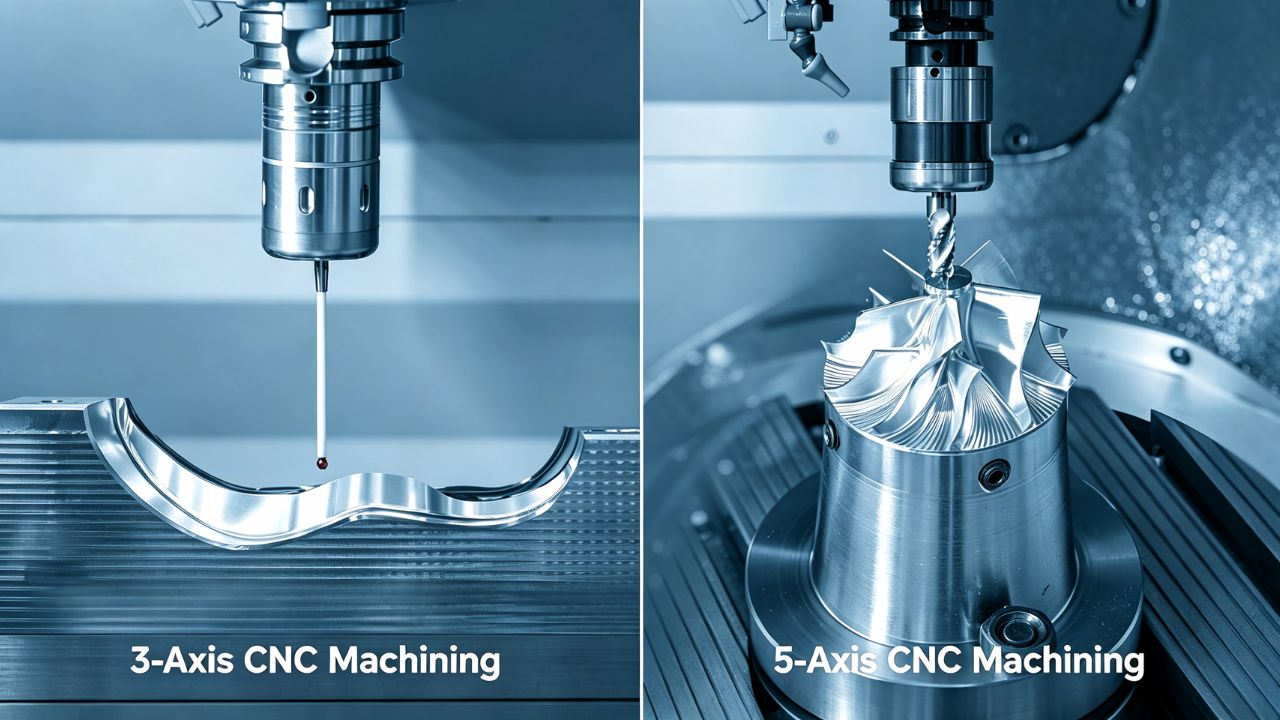
The number of axes for CNC routers is usually 3, and up to 5 at most. Industrial CNC routers can have more axes. With fewer axes, your employees can operate the equipment using simple programming software and a visual operation interface. This requires lower skills from the operators and can reduce your training costs.
Standard milling machines operate on 3 to 5 axes, though advanced multi-tasking centers can incorporate more complex configurations.
Therefore, your employees have to deal with the complex calculation of the tool paths using the software, which increases the programming difficulty. You may need to spend more money to hire professional programmers and technicians.
How to Choose Between a CNC Router and a CNC Milling Machine?
Choosing the right CNC equipment is crucial for your business. Overall, CNC routers are suitable for processing soft materials, projects with tight budgets and deadlines, and those with simple geometric shapes.
CNC milling machines, on the other hand, are suitable for high-precision metal processing, projects with sufficient budgets, and those requiring longer processing periods. Here is an analysis for you from both the cost perspective and the application perspective:
Initial Investment Cost
From the perspective of the initial investment in the early stage, the cost of purchasing CNC routers is lower for you. This is because the overall cost of the CNC routers and their accessories is relatively low.
However, CNC milling machines require a heavy frame and industrial tools. Therefore, the initial investment you made in purchasing CNC milling machines was higher.
Operational and Maintenance Costs
After using the equipment, you will find that CNC routers generally consume less power. This is because they often use lower-power spindles and lighter cutting systems, and the wear of the tools is relatively slow. If you need to operate for a long time, CNC routers are more cost-effective.
However, CNC milling machines consume a lot of power. Moreover, they are mostly used for processing hard materials and high-precision products, and the operation time is long, causing frequent wear and tear of the tools. This requires you to spend more on maintenance and replacement costs.
Industry Applications
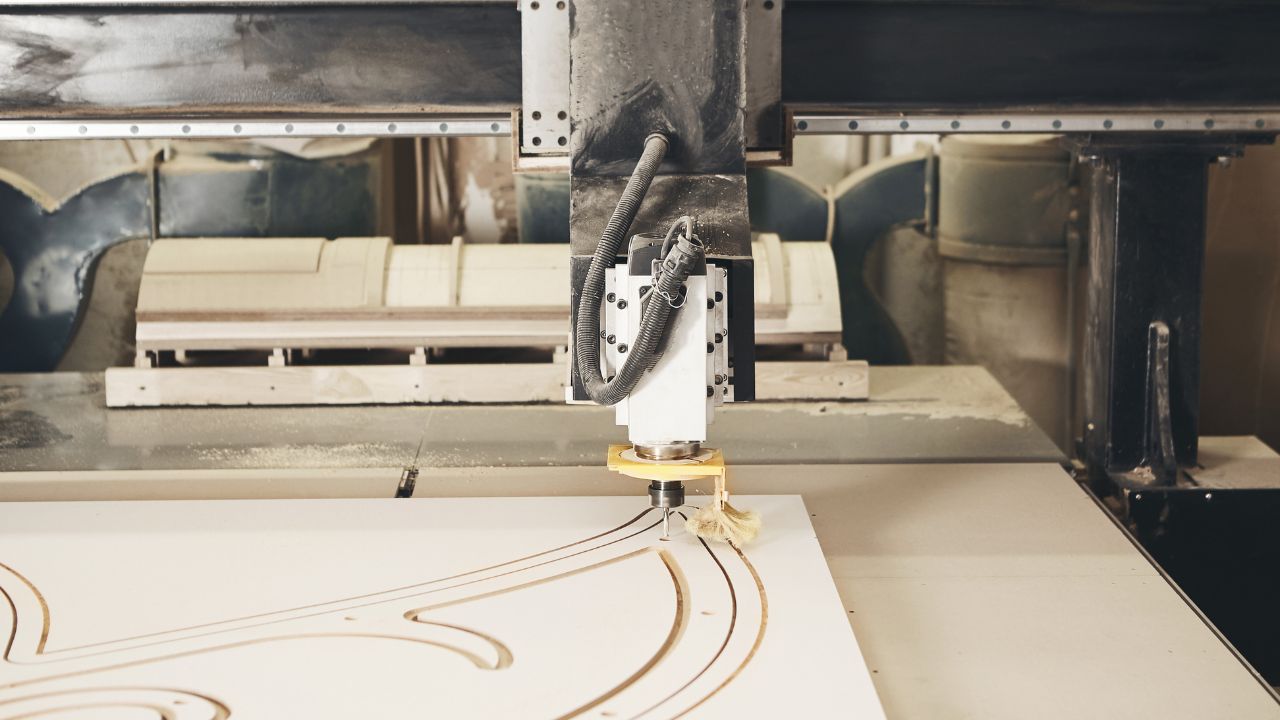
If your business involves woodworking furniture, cabinets, advertising signs, musical instruments, architectural models, plastic parts and other applications, it is more recommended to purchase CNC routers.
CNC routers are suitable for sheet material processing and have high efficiency, which can meet consumers’ short-term customization needs.
CNC milling machines are more suitable for processing precision mechanical parts in fields such as aerospace, automobiles, medical equipment, and mold manufacturing. For these industries, you can provide stable and high-standard workpieces, which is more conducive to subsequent cooperation.
FAQ
Are CNC Routers Suitable for Deep Cavity Machining?
Standard CNC routers are not ideal for deep cavities. Because the z-axis travel range of a common CNC router is limited, it cannot perform deep cavity processing. If you need it, you can use a high-z-axis or 5-axis CNC router.
What Maintenance Is Required for CNC Milling Machines?
It is recommended that you hire personnel who have received professional training for maintenance. Regular calibrations, lubrication, and monitoring of tool wear are usually required for maintenance to ensure long-term accuracy and stability.
What Should You Note When Machining Aluminum on a CNC Router?
If you are going to use a CNC router to process aluminum materials, it is recommended to use shallow depths of cut (< 1mm per pass) and reduce feed rates. Also, use specialized carbide cutting tools instead of woodworking tools.
During the cutting process, reduce the feed speed and use mist lubrication (MQL) or an air blast to promptly remove the chips. This can prevent chip accumulation and tool overheating and avoid blade breakage.
What Are the Differences in Tool Management Systems Between CNC Routers and CNC Milling Machines?
CNC routers mainly use woodworking router bits, V-groove bits and ball-nose bits, and the types are relatively fixed. When preparing inventory, you only need to have sufficient general cutting tools with high consumption and those used for processing soft metals with high wear.
CNC milling machines, on the other hand, require different types of cutters corresponding to different materials and processes. You need to store more specifications and the investment cost will also be higher.
Do CNC Routers or CNC Milling Machines Offer Greater Upgrade Potential?
Because CNC routers usually adopt a modular design, they can be upgraded. You can increase the number of axes or upgrade to a more powerful spindle with automatic tool changer (ATC) to enhance production efficiency.
While a milling machine’s fundamental structural rigidity and cast-iron frame are fixed at manufacture, its control systems, CAM software, and rotary axes can still be upgraded.
Final Thoughts
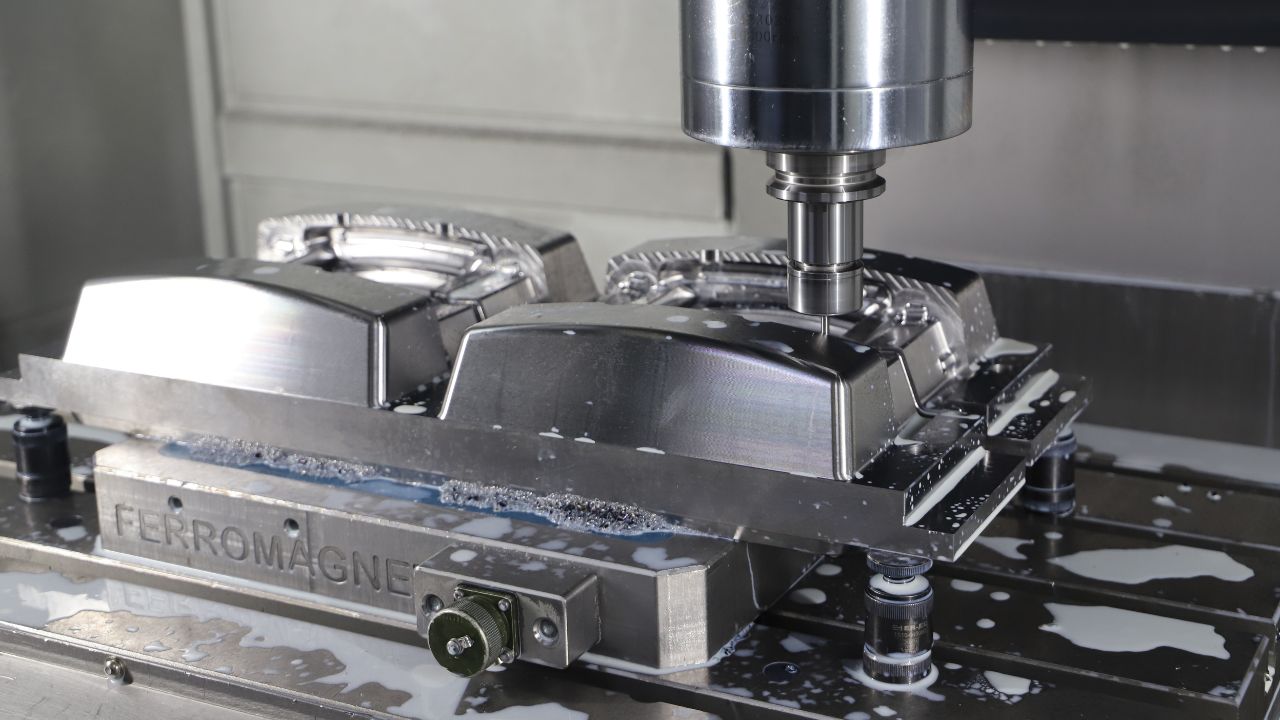
ElephMax specializes in CNC router solutions for panel furniture manufacturing, and can offer you high quality CNC routers. If you are looking for a production solution for CNC processing, please feel free to contact us for cooperation at any time. Our after-sales team provides 24/7 online and offline services.