Amortizing stamping dies on small runs gets expensive, and plasma leaves a rough edge. Parts cut by laser cutting machines have smooth cross-sections without molds, but they involve high initial investment and operating costs. Read on about the advantages and disadvantages of laser cutting machines to see whether they actually make sense for your workshop.
Laser Cutting Machine Advantages
Laser Cutting Benefits for Speed and Flexibility
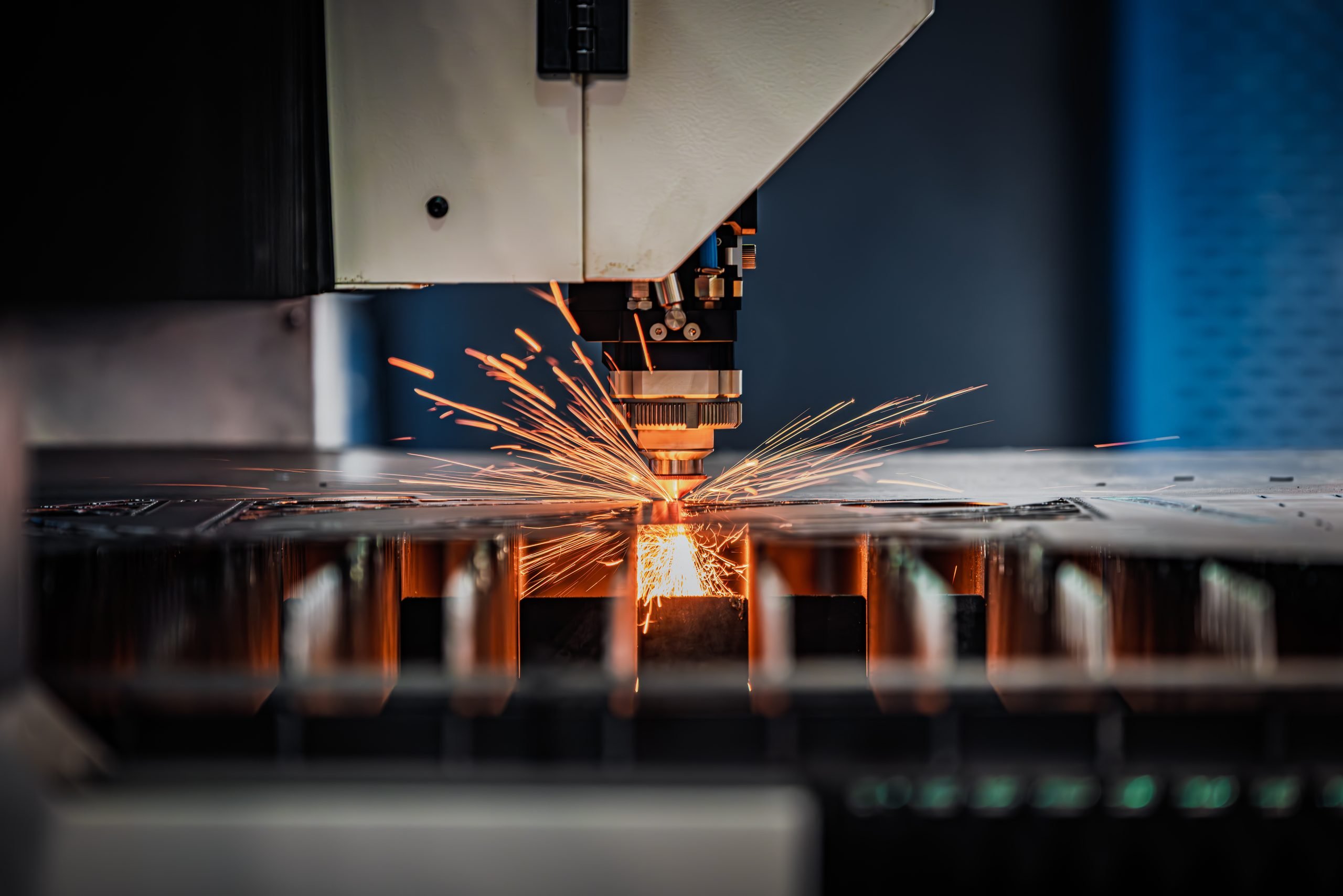
Laser cutting doesn’t require molds—all you need to do is import your design. That alone cuts out the wait for mold production and wipes out tooling costs entirely. Even if the client changes the drawings partway through the project, you only need to update the program—there are no additional charges.
When cutting thin sheets, a laser cutting machine can continuously follow the contour, which is much faster than a CNC punch press that punches one hole at a time. When you receive urgent orders, you’ll have a much easier time hitting the delivery deadline. Compared to stamping and plasma cutting, laser cutting machines can respond much more quickly to orders with high-mix, low-volume (HMLV) production.
High Precision and Repeatability in Laser Cutting Design
Laser cutters produce very narrow cut gaps—usually ranging from 0.1 to 0.3 millimeters. Complex shapes and sharp corners come out clean and smooth, with no secondary processing needed. It has a narrow heat-affected zone, so thin sheets won’t warp or deform due to heat. The parts maintain their dimensions, and you can assemble them directly.
The cutting path of a laser cutting machine is controlled by a CNC program, and part No. 10,000 comes out identical to part No. 1. All parts in a batch are uniform in size during mass production, so you don’t have to repeatedly adjust them on the assembly line.
Using Laser Cutting on Different Sheet Materials
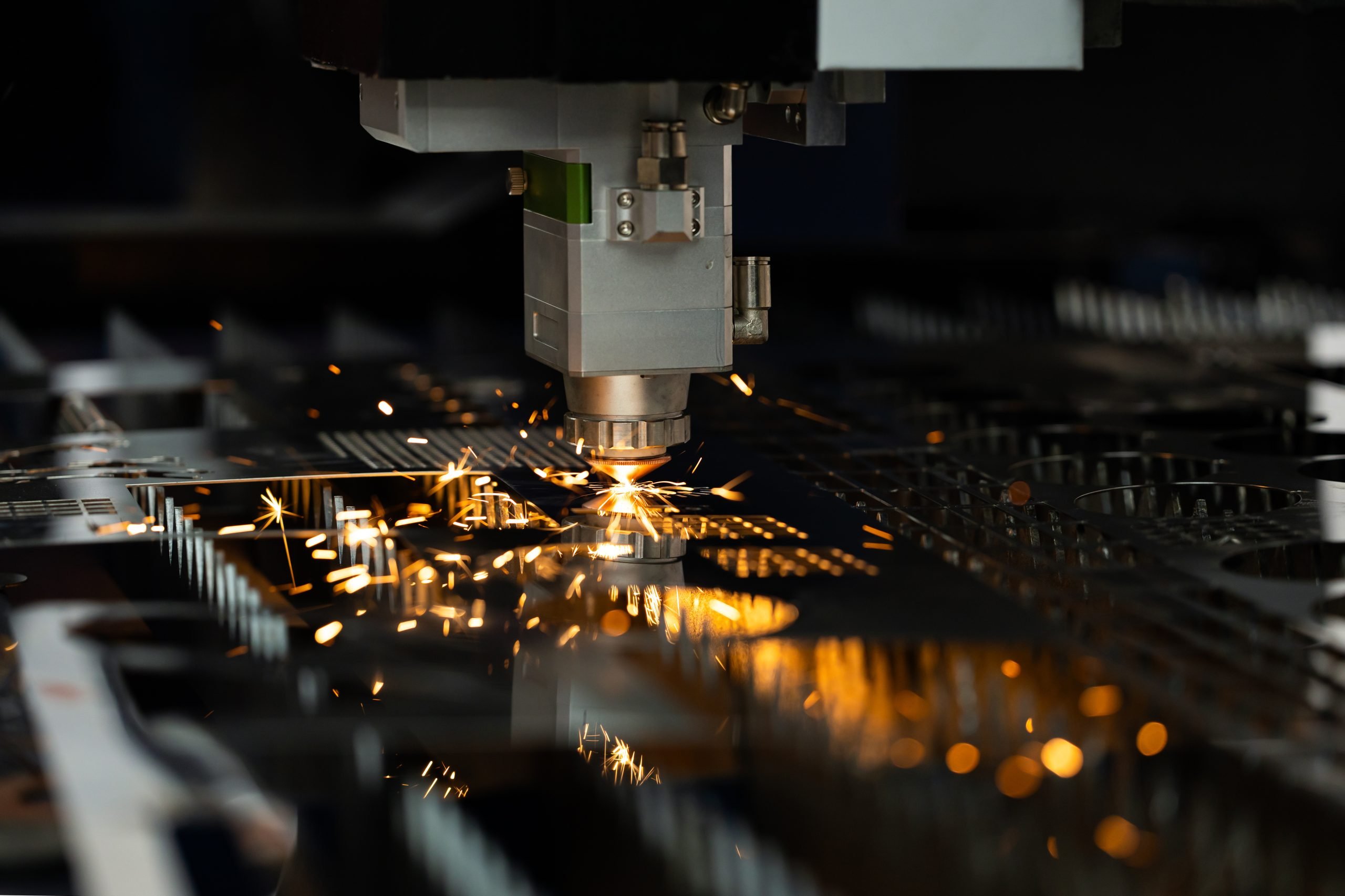
Fiber laser cutting machines can process various metal materials.
| Material Type | Uses |
| Stainless steel, carbon steel | Sheet metal structural components, enclosures and cabinets, shelving brackets |
| Aluminum alloy, copper, brass | Decorative panels, appliance housings, kitchen appliance parts |
CO₂ laser cutting machines are mainly used to process various non-metallic materials.
| Material Type | Uses |
| Acrylic, wood, plastic | Advertising lettering, signage, exhibition displays, decorative screens |
Which type of laser cutting machine you need comes down to what materials your workshop runs most.
Less Waste, Lower Labor with Non-contact Processing
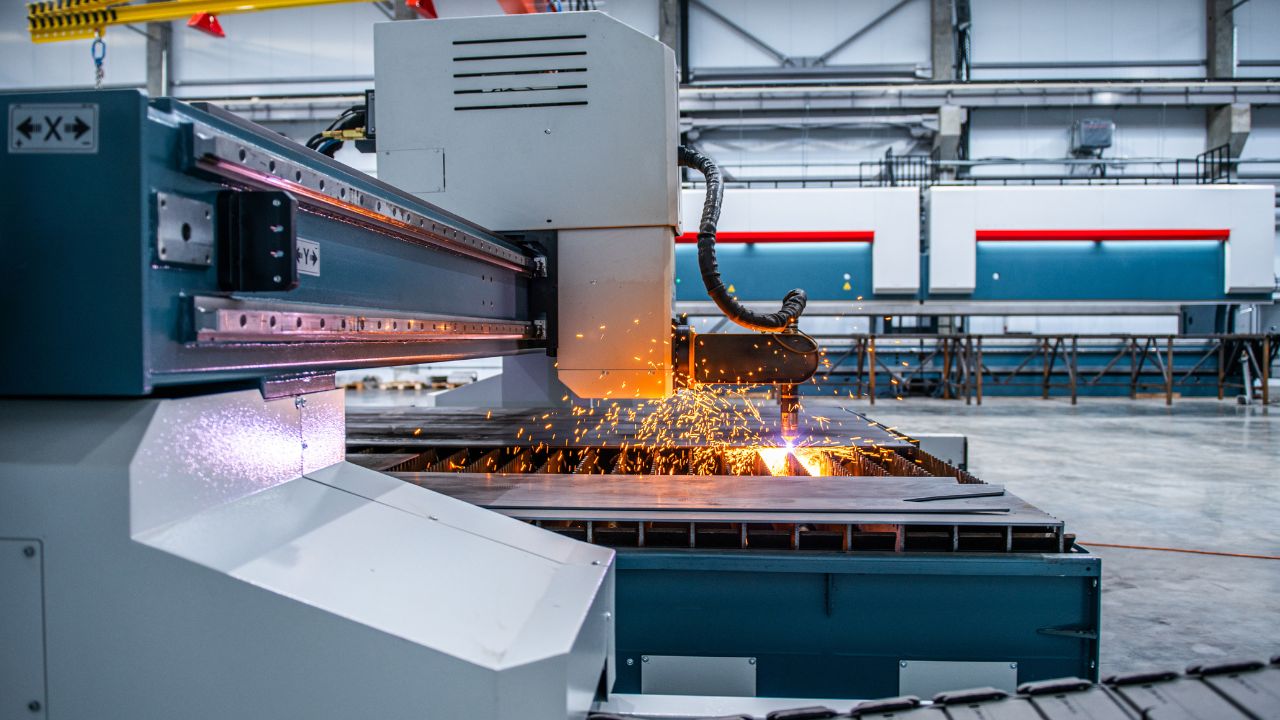
The laser head of a laser cutting machine does not come into contact with the sheet material, so it does not leave indentations or scratches on the surface of soft, thin sheets such as copper and aluminum during the cutting process. That means far less material ends up as scrap.
When using a laser cutter, you only need to leave a gap between parts equal to the width of the cut. They can be arranged more closely together on the sheet, and the sheet utilization rate will be much higher than with stamping.
You can equip the laser cutting machine with an automatic loading and unloading system.
Most employees pick up the basic operations within a week or so. You don’t have to rely on experienced mold makers. You don’t need to assign staff to work the night shift. Overall, scheduling is far less rigid than what a stamping operation typically demands.
Laser Cutting Machine Disadvantages
High Upfront and Running Costs
An industrial-grade fiber laser cutting machine—together with the accompanying cooling system and dust collection equipment it requires—carries a steep purchase price. And once the machine is running, the costs keep coming.
The daily operation of a laser cutting machine requires a constant supply of large amounts of auxiliary gases—oxygen for cutting carbon steel and nitrogen for cutting stainless steel. Nitrogen is consumed quickly and is costly. Consumable parts such as nozzles, protective lenses, and focusing lenses also need to be replaced on a regular basis.
Fumes, Reflection, and Side Effects
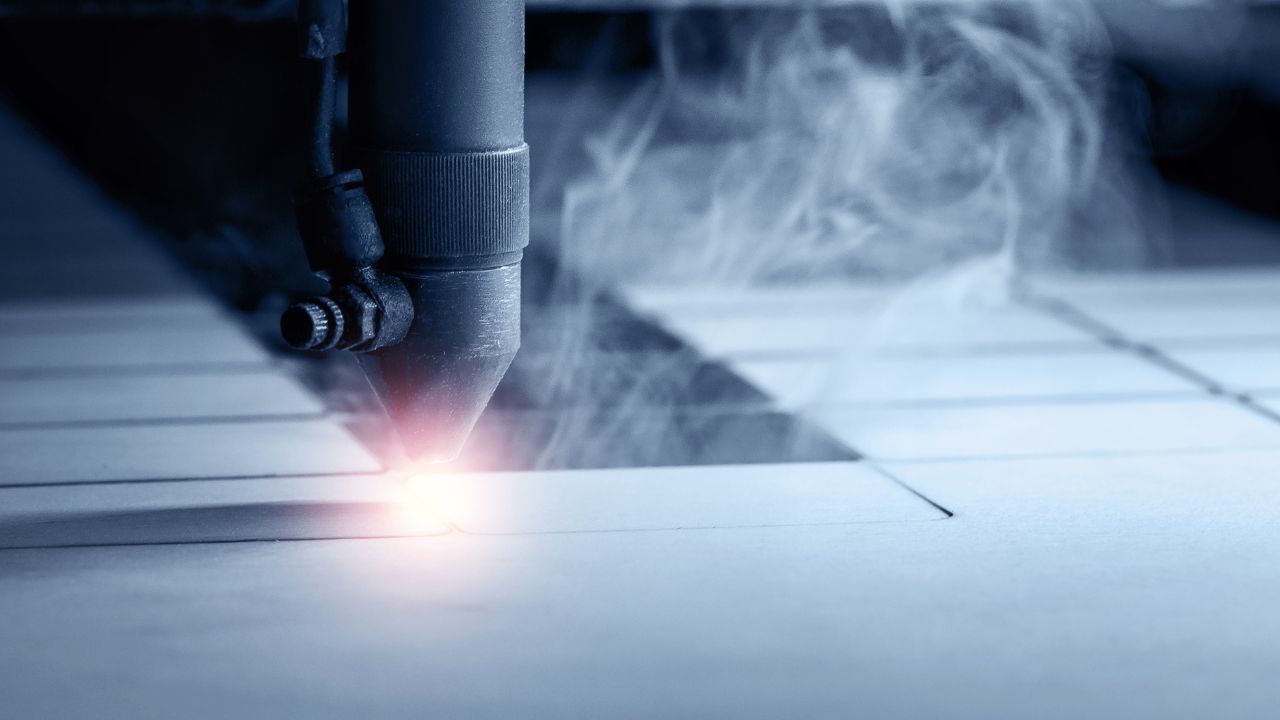
When you cut metal with a laser, the material will be vaporized, releasing dust and fumes in the process. Cutting stainless steel releases hexavalent chromium dust, while cutting galvanized sheet metal produces zinc oxide fumes. Prolonged exposure to either poses serious health risks. A proper industrial dust collection and filtration system isn’t optional—cut corners here, and you’re putting your team at risk.
Highly reflective materials such as aluminum, copper, and brass reflect part of the laser beam. Modern fiber lasers include protection systems, but reflective metals still require proper configuration and experience. Modern laser cutting machines do have built-in anti-reflection protection, but these materials still call for an experienced operator at the controls.
Thickness Limits and the Laser Cutting Process Trade-Off
There’s a ceiling on how thick a laser cutter can realistically handle. Standard 3kW-6 kW fiber lasers usually cut carbon steel to a thickness of 20-30 mm and stainless steel to 15-20 mm. Because aluminum and copper have high thermal conductivity and high reflectivity, the thicknesses they can be cut to are even smaller.
If the thickness exceeds this range, you will see your laser cutter’s cutting speed fall off, the cut surface quality suffer, and your gas and power bills climb. When machining thick plates, you have to strike a balance between speed, quality, and cost.
Operator Skill and Maintenance Requirements
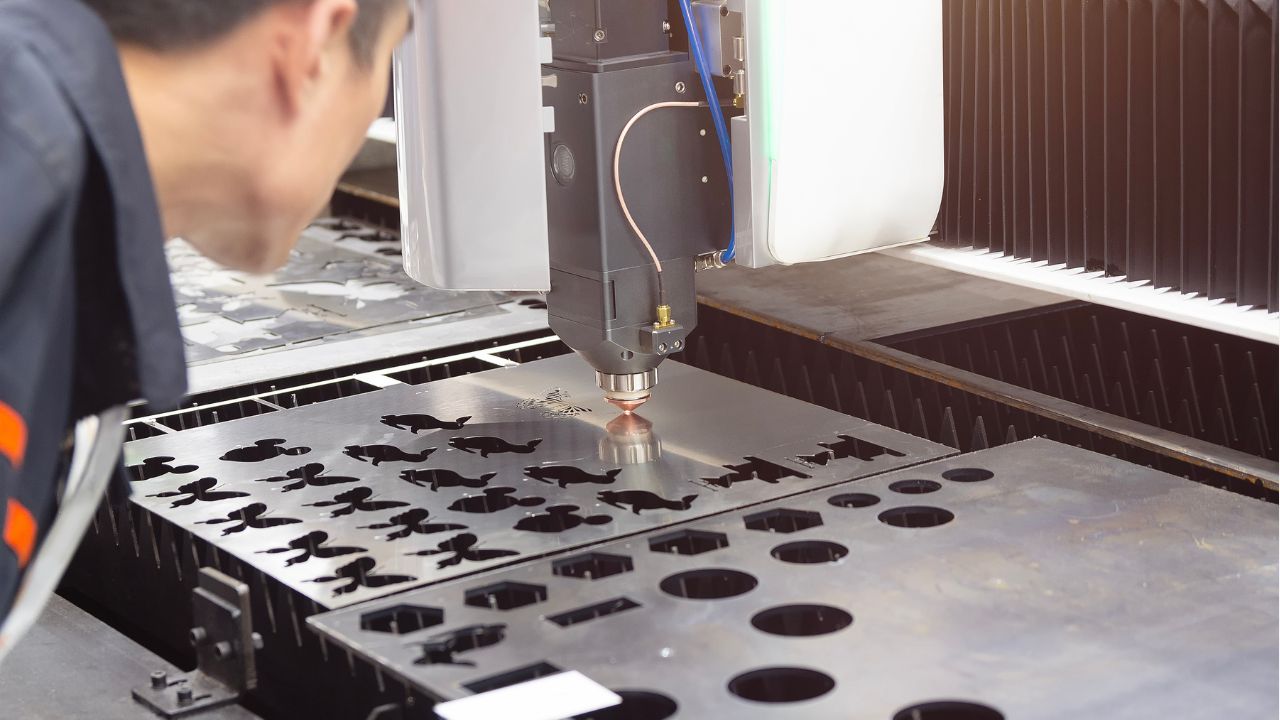
Tuning the process parameters of a laser cutting machine—such as laser power, cutting speed, focal position, and gas pressure—varies depending on materials and thicknesses. To operate a laser cutting machine proficiently, you need experienced employees.
You need to regularly inspect and clean the protective lenses of the laser cutting machine, calibrate the optical path, and promptly replace clogged nozzles. If you skip routine maintenance, the cutting quality will show it quickly. That means investing in training and spreading the knowledge across your team—one or two veterans aren’t enough to carry the whole operation.
Common Laser Cutting Machine Uses Across Industries
| Industry | Application |
| Sheet metal fabrication | Enclosures and cabinets, warehouse shelving components, structural parts cutting |
| Automotive parts | Sheet metal brackets, chassis spacers, custom trim parts |
| Electronics and electrical appliances | Precision panels, membrane switches, internal structural components |
| Kitchenware and home appliances | Stainless steel panels, edge trimming, and hole cutting |
| Architectural decoration and advertising | Decorative screens, openwork lettering, signs |
| Medical devices | High-finish components, precision thin-wall parts |
FAQ
What Is the Lifespan of a Laser Cutting Machine?
The rated lifespan of a fiber laser cutting machine typically exceeds 100,000 hours, though how long your machine actually lasts comes down to how well you maintain it. Keep up with maintenance, and an industrial-grade fiber optic cutter should run strong for 8 to 10 years.
Which Material Should I Never Cut in the Laser Cutting Machine?
| Materials That Should Not Be Cut | Reason |
| Chlorinated materials such as PVC (polyvinyl chloride) | Releases hydrochloric acid and highly toxic dioxins, corrodes equipment, and harms the respiratory tract. |
| Fluorinated materials (such as PTFE) | Produce toxic gases. |
| ABS | Prone to melting and catching fire. |
| Carbon Fiber/Fiberglass | Produces toxic resins and dust. Causes serious damage to optical components and poses a health hazard. |
| Any sheet material with unknown composition | May contain halogens, and risks are uncontrollable. |
How Do I Determine Whether to Buy a New or Used Laser Cutting Machine for My Shop?
| New Laser Cutting Machine | Used Laser Cutting Machine | |
| Warranty and Support | Full warranty and after-sales service. | No warranty or a short warranty. You are responsible for any repair costs. |
| Application | Long-term mass production, high-precision orders. | Prototyping, temporary capacity boost. |
| Key Risks | High initial investment. | The remaining lifespan of the laser source is unknown. Power attenuation in fiber lasers. Difficulties in upgrading legacy CNC systems. |
What Should I Look for When Inspecting Laser-Cut Parts from a Potential Supplier?
| Checklist | What to Check |
| Cutting Surface Perpendicularity | The cross-sectional grain is uniform, with no slope. |
| Burr Volume | The bottom edge is clean, with almost no slag residue. |
| Corner Mass | No sagging on sharp or rounded corners. |
| Thin Sheet Flatness | Slight warping is normal, and noticeable deformation is a problem. |
| Dimensional Consistency | Randomly select a few items from the batch to compare key measurements. |
How Much Floor Space and Facility Preparation Does a Laser Cutting Machine Require?
Apart from leaving the floor space for the laser cutting machine itself, you’ll need to set aside space in front and behind it for loading and unloading operations, and leave maintenance aisles on all sides. You will need to provide a three-phase power supply at the site. Industrial-grade models usually start at several dozen kilowatts. Compressed air piping and storage areas for oxygen or nitrogen cylinders must be planned.
The foundation at your site must be level and capable of supporting the weight of several metric tons of equipment. You need to ensure proper ventilation and heat dissipation for the cooling system. The dust collection ducts must be connected to the outdoors or to a central dust collection system.
Can Laser Cutting Machine Automation Be Added Later, Or Should It Be Purchased Upfront?
Adding a laser cutting machine automation system later is doable, but whether it works depends on the structure of your original machine and the control system interfaces. To retrofit the existing laser cutting machine, you’ll need to leave room for expansion in the facility, and the equipment must support the corresponding communication protocols.
Aftermarket add-ons often lack the compatibility and synchronization of factory-built automation. If your order volume is likely to grow within the next year, building out a fully equipped facility from the start makes more sense. Doing it right the first time is cheaper and faster than retrofitting later.
Final Thoughts
We supply laser cutting machines and CNC routers to fabrication shops of all sizes—no dies required, and tight tolerances are standard. If you’re on the fence about whether your parts are a good fit for laser cutting, just send over your drawings. We’ll run a sample cut and tell you exactly what’s possible.