Understanding the differences among various CNC routers can help you find high-quality CNC routers that are suitable for your business. This can improve your product quality, meet customer needs, and boost order conversion. This article introduces the key considerations when making a choice and helps you avoid purchasing mistakes.
CNC Routers by Different Axis Configurations
CNC routers with different axis configurations are suitable for various machining requirements. You should select the appropriate model based on the complexity of the project workpiece design.
Below, we introduce three typical CNC routers with different axis configurations to match the production goals and avoid over-specification or under-capacity of the equipment.
3-Axis CNC Routers
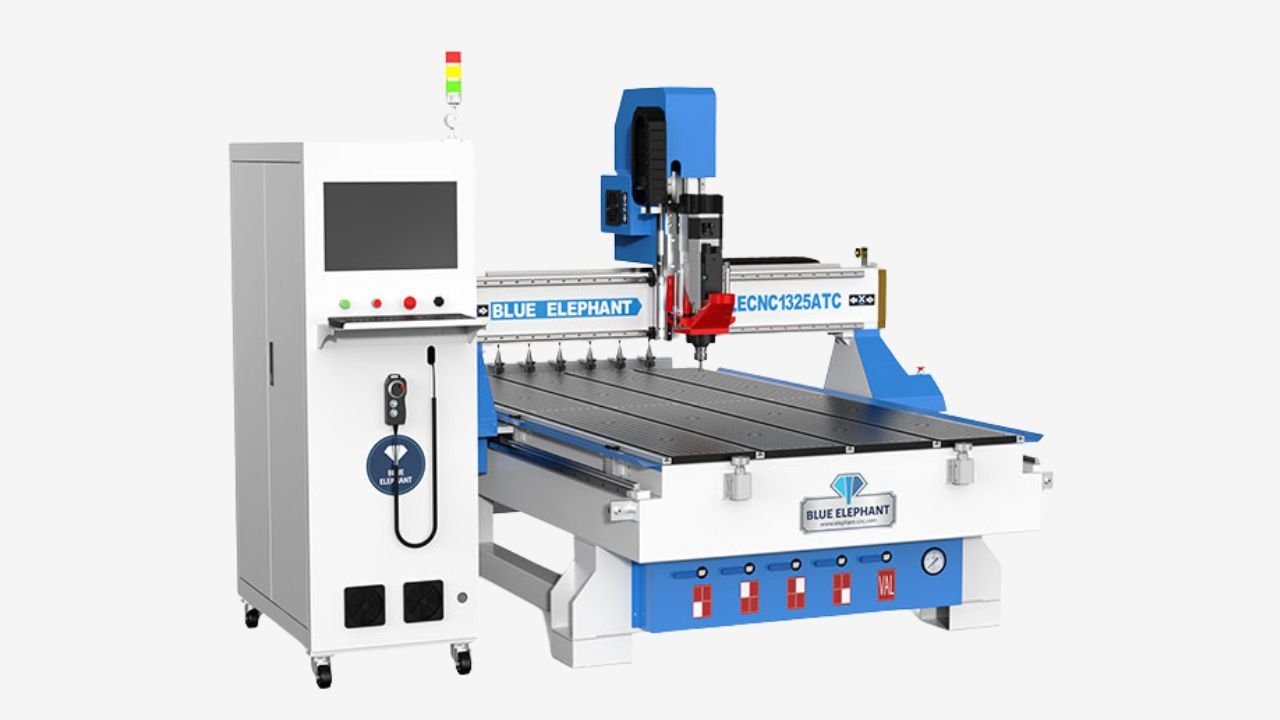
The 3-axis CNC router is the most standard equipment, featuring typical X, Y, and Z axes. The gantry moves left and right (X) and forwards and backwards (Y), while the spindle moves up and down (Z).
The 3-axis CNC router can basically meet the machining requirements for flat workpieces. If your project involves high-speed, repetitive cutting of cabinets or decorative panels, this model is a suitable choice.
4-Axis CNC Routers
The 4-axis CNC router is an extension of the 3-axis CNC router, adding a rotation axis (typically the A-axis, which revolves around X). This enables your worktable or rotary axis to rotate and lets you process rotary workpieces. The 4-axis CNC router enables the positioning of workpieces for multi-face drilling without the need for re-clamping.
For cylindrical or prismatic parts like stair columns, you can machine them in a single setup.
5-Axis CNC Routers
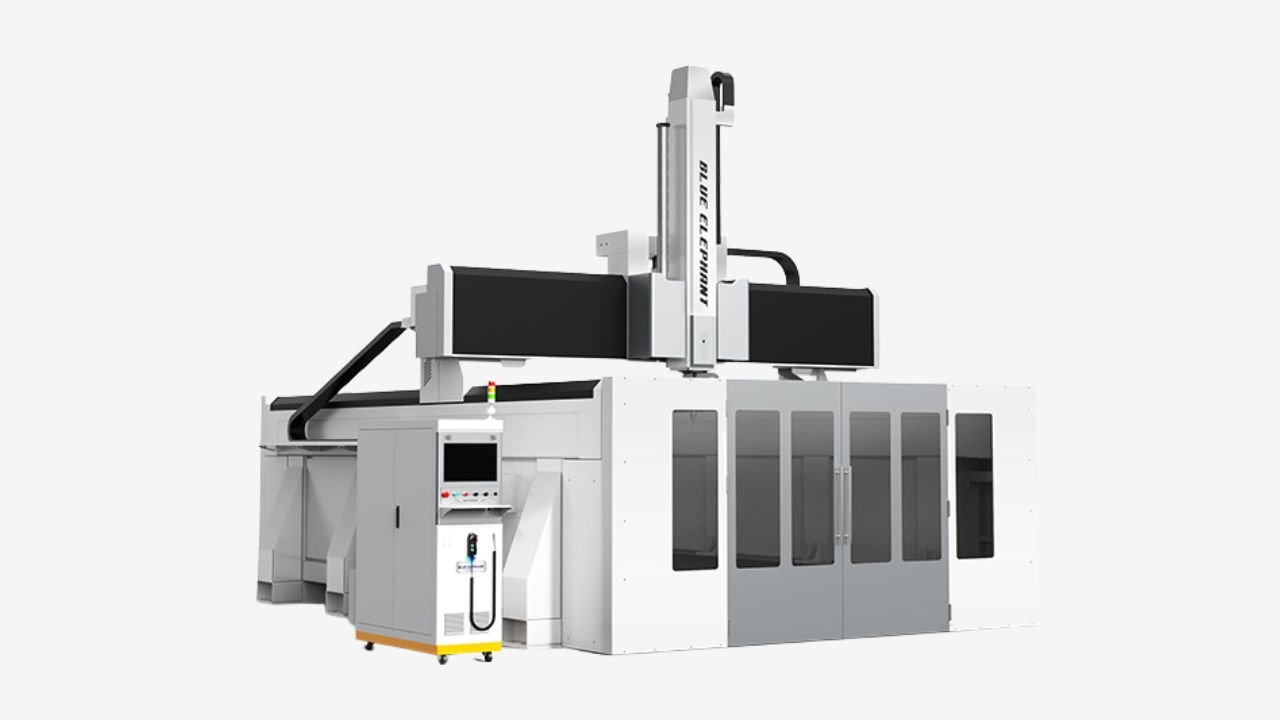
Compared to the standard 3-axis CNC router, the 5-axis CNC router has two additional rotation axes (e.g., A and B, or B and C).
The tool or worktable can be tilted entirely, enabling the spindle to access the workpiece at an inclined angle. This facilitates machining of intricate 3D profiles and recessed features, delivering distinctive processing results unattainable with standard machinery.
It reduces the need for manual repositioning and allows multi-angle machining in fewer setups. For example, furniture legs with curves, sculptural elements, or intricate moldings. 5-axis CNC routers enable you to offer high-end custom solutions to your clients.
Key Factors to Consider When Choosing the Best CNC Router
CNC Router Worktable Size and Working Area
Worktable size refers to the overall length and width of the worktable. The working area is the range within which the spindle can travel during cutting operations. When you are choosing to purchase CNC routers, you need to consider whether its working area matches the size of the typical materials you process.
For example, if you often process 1500×3000 mm sheets, a 1530 model CNC router would be more suitable for you. This ensures that the entire sheet can be processed in a single pass, which is beneficial for improving your production efficiency and recovering costs quickly.
Worktable size and working area directly affect material utilization and production flexibility. Purchasing based on this consideration prevents material waste or rework stemming from inadequate machine dimensions.
CNC Router Spindle Power and Types
The power and type of the CNC router spindle dictate both the materials you can process and the cutting speed, which in turn affect production efficiency and the upper limit of the quality of the final product.
For example, CNC routers with spindle power ratings from 1.5kW to 3kW are suitable for processing materials such as wood, MDF, and acrylic. CNC routers with power ranging from 3kW to 9kW are suitable for use in processing hardwood furniture or aluminum materials. The high-power spindle allows for deeper single cuts, reducing your total processing time.
The spindles are mainly divided into two types: air-cooled type and water-cooled type. The air-cooled spindles have limited heat dissipation capacity but are dust-resistant and durable.
The water-cooled spindles have high heat dissipation efficiency, but there is a risk of water leakage and cracking. You can choose the appropriate type according to the working conditions.
CNC Router Frame Rigidity and Manufacturing Quality
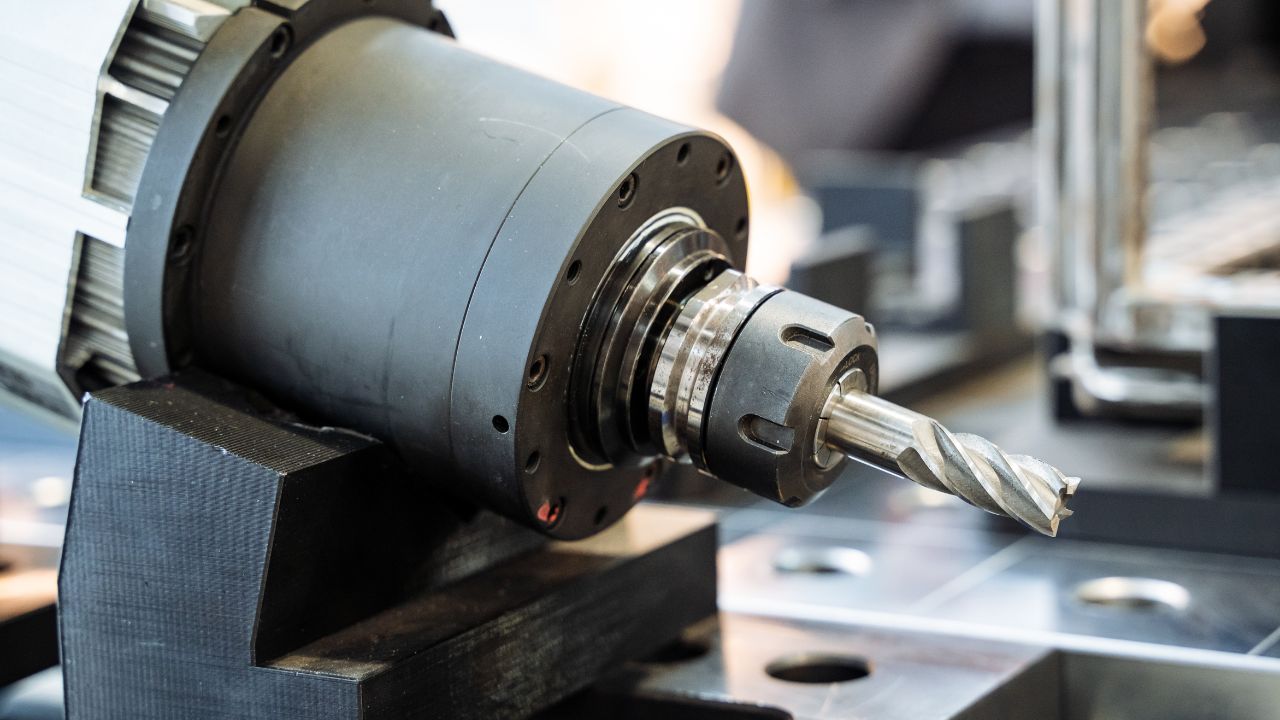
The framework structure of your CNC routers determines the processing accuracy, long-term stability and service life of the equipment.
The vibration damping performance of the cast or welded steel frame is often better than that of the aluminum profile frame. The rigid CNC routers can reduce cutting vibrations and minimize tool jitter. This enables you to obtain a smoother surface of the processed parts and extend the service life of the tools.
However, if you use CNC routers with insufficient rigidity, you will need to use a slower feed rate and shallower depths of cut. Note that this will reduce your factory’s hourly output and it is difficult to ensure continuous production.
CNC Router Software Compatibility
CNC routers are computer-controlled automated equipment whose machining capabilities depend on the software installed. Software compatibility affects the learning curve and design flexibility.
For example, VCarve and Easel are used for 2D and 2.5D processing, while Fusion 360 can handle complex 3D and multi-axis toolpath generation.
Before purchasing, you need to confirm whether this CNC router supports standard G-code operation and can be compatible with your preferred CAD or CAM platform. Avoid affecting the overall workflow efficiency of your factory.
Auxiliary Systems and Equipped Accessories
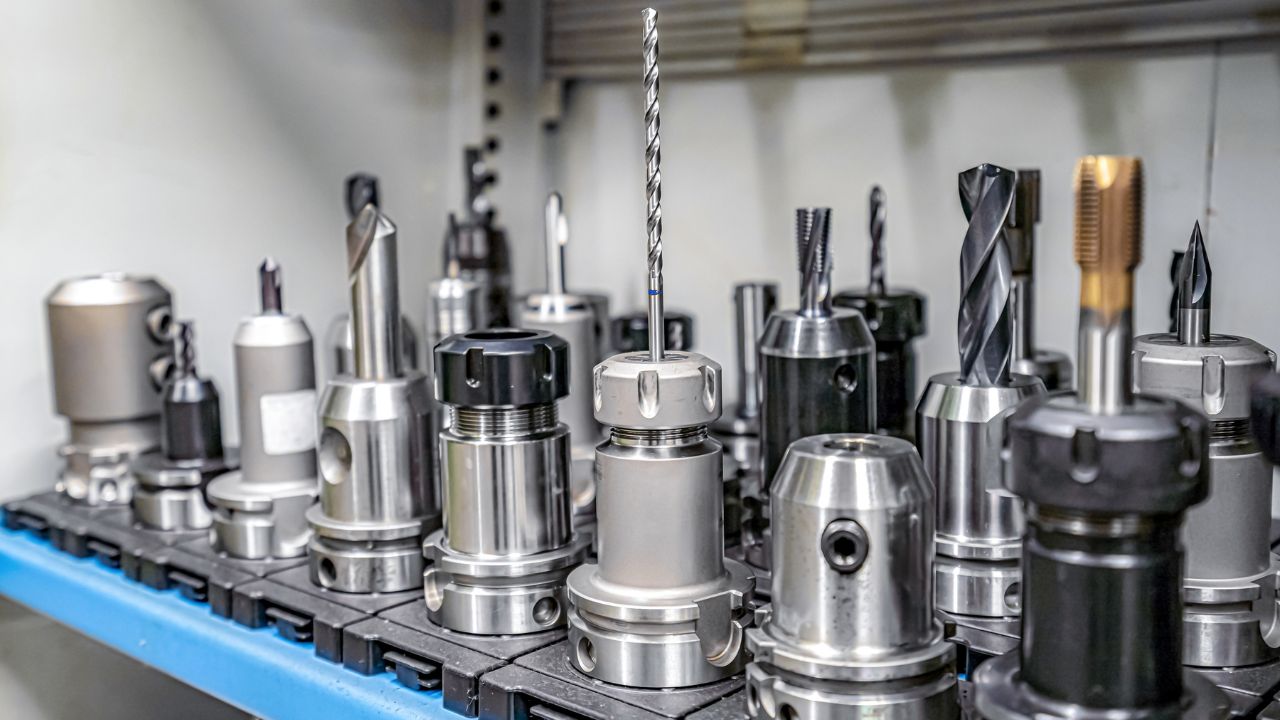
The auxiliary systems and accessories of CNC routers also affect your production efficiency and safety compliance.
For instance, the automatic tool changer system (ATC) determines production flexibility. CNC routers equipped with ATC can pre-load multiple tools such as rough milling, fine finishing, V-groove tools, which are suitable for industrial production. This can reduce the downtime for tool changing and increase the tooling inventory.
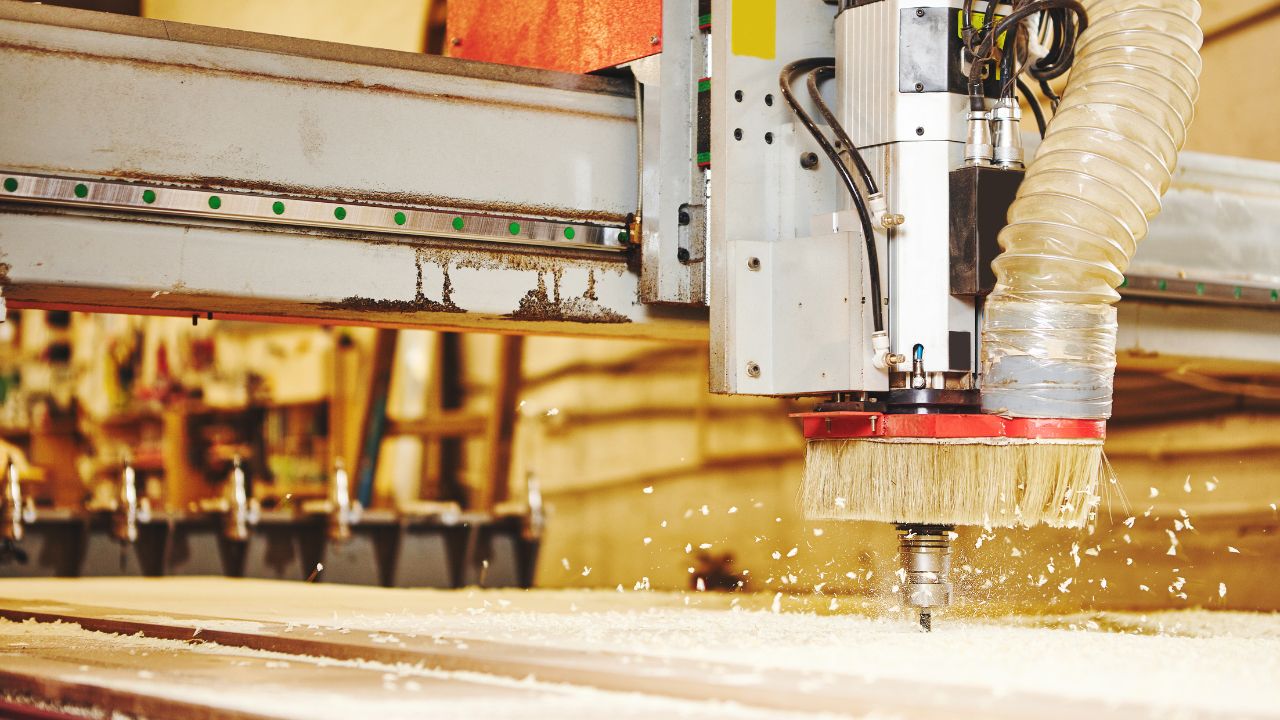
The dust collection system is essential for professional CNC routers and can ensure the compliance and safety of your production. Wood dust is harmful and prone to wear equipment. Equipping an efficient dust collection system is more in line with the strict requirements of safety compliance.
CNC Router Pricing and Costs
Before making the purchase, you should not only consider the performance of CNC routers, but also take into account the price of the equipment to be purchased and the subsequent expenses. You can consider the following points:
- Initial investment: The price of the CNC router itself
- Maintenance costs: The regular maintenance expenses for the CNC router to operate continuously
- Training costs: The time and cost required for operators to effectively use the CNC router
- Error costs: Human errors in programming may lead to material scrap or unplanned downtime
If your business mainly focuses on customized products with high-value custom work, you may need to allocate more budget to purchase high-performance CNC routers. For instance, ATC, water-cooled spindles, and the accompanying water chillers come at a higher initial cost.
FAQ
Is a Dust Collection System Mandatory for CNC Routers?
Yes, in most professional settings, a dust collection system is essential and often legally required.
Because wood dust and MDF dust are known health hazards, in order to ensure the health and safety of your employees, dust extraction is necessary. Moreover, the dust can enter the guide rails and electronic components, accelerating machine wear and affecting machining accuracy.
How to Evaluate If Your Production Requires an ATC CNC Router?
If your order only requires a single operation, such as for cutting standard-sized plates, then ATC is not necessary. For some simple operations like cutting and simple edge trimming, the number of tool changes per piece is no more than 2-3 times, and thus ATC is not required either.
However, ATC becomes your ideal choice when frequent tool changes affect production efficiency or labor costs.
Which CNC Router Is Suitable for Beginners in Small Businesses?
We recommend that you purchase entry-to-mid level 3-axis CNC routers. Select the appropriate size based on your project requirements. It should not be too large to minimize waste and energy consumption. If you are not processing hard materials, a main spindle with a power of 1.5kW to 3kW and a dust collection system is sufficient.
How Do Costs Compare Between Water-Cooled and Air-Cooled Spindles?
The air-cooled spindle itself has a relatively low cost and a simpler design, with an extremely low failure rate and requiring almost no specialized maintenance. Therefore, the maintenance cost you need to bear is also lower.
In contrast, the water-cooled spindle and the corresponding water chiller are more expensive, and the system is more complex. They require periodic maintenance, such as coolant level checks and hose inspections.
Is It Possible to Upgrade or Expand the CNC Router When Business Volume Increases?
This depends on the model and worktable design you choose. When purchasing, consider future expansion options to avoid having to buy a new machine later. In terms of functionality, you can consult the supplier to see if they can install ATC, rotary axes, and upgrade to a high-power spindle.
Final Thoughts
ElephMax, as a professional manufacturer in China specializing in the research and production of CNC routers, can provide you with high-quality CNC routers. If you are interested in the production plans for CNC machining or wish to place an order for our products, please contact us. Our team is always ready to answer your questions.